Dns
What is the difference between an A record and a CNAME record?
The difference between an A record and a CNAME record is what they point to. An A record points a hostname directly at an IPv4 address, such
Dive Deeper
What are the best DNS providers for websites?
The best DNS providers for most websites are Cloudflare for a fast, free, easy starting point, Amazon Route 53 if you already run on AWS, **G
Dive Deeper
What are the best public DNS resolvers?
The best public DNS resolvers for most people are Cloudflare (1.1.1.1) for speed and privacy, Google Public DNS (8.8.8.8) for reliability and
Dive Deeper
Cloudflare DNS vs Amazon Route 53: which is better?
Neither Cloudflare DNS nor Amazon Route 53 is better in every case. Cloudflare is usually the better choice for public websites that want fast, f
Dive Deeper
What are the most common DNS mistakes that take websites offline?
The most common DNS mistakes that take websites offline are letting the domain expire, changing nameservers without copying every record to the new p
Dive Deeper
What is the DNS hierarchy explained simply?
The DNS hierarchy is the tree-shaped structure that organises every domain name on the internet. At the very top is the root, written as a single
Dive Deeper
What is DNS over TLS (DoT) and how does it compare to DoH?
DNS over TLS (DoT) is a protocol that wraps ordinary DNS queries in a TLS-encrypted connection to your resolver, using its own dedicated port, **TCP
Dive Deeper
What are DNS records and what are the different types?
DNS records are the individual entries stored in a domain's DNS zone. Each one maps a name to a specific piece of information, such as an IP address,
Dive Deeper
What is the difference between DNS and DHCP?
DNS and DHCP are two separate network services that work closely together. DHCP (Dynamic Host Configuration Protocol) automatically gives a devic
Dive Deeper
Does DNS affect website speed and SEO?
Yes, DNS affects website speed, and it can affect SEO, but mostly in indirect ways. Every new visitor's browser has to look up your domain before it
Dive Deeper
What is the difference between a domain and a DNS zone?
A domain is a name in the DNS tree together with everything beneath it: example.com as a domain includes www.example.com, mail.example.com,
Dive Deeper
Why are my emails bouncing after a DNS change?
Emails usually bounce after a DNS change because a mail-related record was lost or altered in the move. The most common causes are MX records that we
Dive Deeper
Free vs premium DNS hosting: is paid DNS worth it?
Paid DNS is worth it when downtime directly costs you money, when you need features such as health-checked failover, geo-routing or secondary DNS, or
Dive Deeper
How do CDNs use DNS to route traffic?
CDNs use DNS as the switch that decides which of their servers each visitor connects to. When you put a site behind a CDN, you either point a hostnam
Dive Deeper
How does DNS work inside Docker and Kubernetes?
Inside Docker, containers on a user-defined network use Docker's embedded DNS server at 127.0.0.11, which resolves other containers and Compose
Dive Deeper
How to audit your DNS records for security risks?
To audit your DNS records for security risks, start by exporting a complete inventory of every zone and record you own, then work through a checklist
Dive Deeper
How to automate DNS record changes with an API?
To automate DNS record changes with an API, create a scoped API token at your DNS provider, then send authenticated HTTP requests to its DNS endpoint
Dive Deeper
How to change the nameservers for your domain?
To change the nameservers for your domain, first set up the new DNS provider and recreate all of your existing records there. Then log in to your **d
Dive Deeper
How to check DNS propagation worldwide?
To check DNS propagation worldwide, first confirm that your domain's authoritative nameservers are serving the new record, then query a spread of pub
Dive Deeper
How to check the DNS records for any domain?
To check the DNS records for any domain, use a lookup tool and ask for each record type by name. On macOS or Linux, run dig example.com MX (or A,
Dive Deeper
How to choose a managed DNS provider for your business?
To choose a managed DNS provider for your business, start by writing down your requirements: the cost of downtime, where your users are, the record t
Dive Deeper
How to configure DNS for a staging or development site?
To configure DNS for a staging or development site, the simplest approach is to create a subdomain such as staging.example.com and point it at your
Dive Deeper
How to connect a custom domain to Vercel using DNS?
To connect a custom domain to Vercel, add the domain in your project under Settings > Domains, then create the DNS records Vercel shows you at yo
Dive Deeper
How to diagnose slow DNS resolution?
To diagnose slow DNS resolution, first measure it: time a lookup with dig and read the Query time line, or use curl -w '%{time_namelookup}' t
Dive Deeper
How to export and back up your DNS zone file?
To export and back up your DNS zone file, use your DNS provider's export feature, either the "Export" button in the dashboard or the equivalent API o
Dive Deeper
How to fix DNS conflicts between CNAME and other records?
To fix a DNS conflict between a CNAME and other records, you need to make sure the name that holds the CNAME has no other records at all. Either
Dive Deeper
How to fix the DNS_PROBE_FINISHED_NXDOMAIN error?
DNS_PROBE_FINISHED_NXDOMAIN is an error shown by Chrome and other Chromium-based browsers when a DNS lookup for the website's domain returns **NXDOMA
Dive Deeper
How to fix the "DNS server not responding" error?
The "DNS server not responding" error means your computer sent DNS queries to its configured DNS server but got no reply, so it can't turn website na
Dive Deeper
How to fix ERR_NAME_NOT_RESOLVED in Chrome?
ERR_NAME_NOT_RESOLVED is Chrome's error for "I couldn't find an IP address for this website's name". To fix it, first check the address for typos and
Dive Deeper
How to flush the DNS cache on Windows, Mac, Linux and browsers?
To flush the DNS cache, run ipconfig /flushdns in an administrator Command Prompt on Windows, `sudo dscacheutil -flushcache; sudo killall -HUP mDNS
Dive Deeper
How to lower TTL before a website migration?
To lower TTL before a website migration, find the current TTL on the records you're going to change, then reduce it to a short value such as 300 seco
Dive Deeper
How to manage DNS for multiple domains efficiently?
To manage DNS for multiple domains efficiently, start with an inventory of every domain, its registrar and its DNS provider, then consolidate them on
Dive Deeper
How to manage DNS as code with Terraform?
To manage DNS as code with Terraform, you configure the Terraform provider for your DNS host (for example cloudflare/cloudflare or hashicorp/aws
Dive Deeper
How to move your DNS hosting without downtime?
To move your DNS hosting without downtime, recreate every record from your current zone at the new provider before you touch the nameservers, the
Dive Deeper
How to point your domain to a new web host?
To point your domain to a new web host, get the new server's IP address (or the hostname the host gives you), then go to wherever your domain's DNS i
Dive Deeper
How to redirect a root domain to www?
To redirect a root domain such as example.com to www.example.com, you need two things: DNS records that send both names to a server, and an **HTT
Dive Deeper
How to run your own DNS server with BIND or CoreDNS?
To run your own DNS server, install BIND 9 (sudo apt install bind9) or CoreDNS on at least two servers in different locations, write a zone
Dive Deeper
How to set up a subdomain using DNS?
To set up a subdomain using DNS, log in to the provider that hosts your domain's DNS and add a record whose name is the subdomain label, such as
Dive Deeper
How to set up DNS records for Google Workspace email?
To set up DNS records for Google Workspace email, add five records at your domain's DNS provider: a TXT verification record that proves you own t
Dive Deeper
How to set up DNS records for Microsoft 365?
To set up DNS records for Microsoft 365, add your domain in the Microsoft 365 admin centre and create the records it lists at your DNS provider: a **
Dive Deeper
How to set up DNS records for Shopify, Wix or Squarespace?
To set up DNS records for Shopify, Wix or Squarespace, you point your domain at the platform with two kinds of records at your DNS provider: one or m
Dive Deeper
How to set up custom private nameservers for your domain?
To set up custom private nameservers such as ns1.example.com and ns2.example.com, you need at least two IP addresses that run (or front) an autho
Dive Deeper
How to use the dig command to troubleshoot DNS?
To use the dig command to troubleshoot DNS, run dig name type, such as dig example.com A, and read the status in the header and the records
Dive Deeper
How to use nslookup on Windows, macOS and Linux?
To use nslookup, open a terminal (Command Prompt or PowerShell on Windows, Terminal on macOS or Linux) and type nslookup followed by a domain name,
Dive Deeper
How to keep your domain at one registrar and DNS with another provider?
To keep your domain at one registrar and your DNS with another provider, create a DNS zone for your domain at the DNS provider, add all your records
Dive Deeper
How to verify domain ownership with a TXT record?
To verify domain ownership with a TXT record, copy the verification value the service gives you (for example google-site-verification=abc123...), l
Dive Deeper
What is the difference between recursive and iterative DNS queries?
The difference between recursive and iterative DNS queries is who does the work of finding the answer. In a recursive query, the client asks a DN
Dive Deeper
Registrar DNS vs third-party DNS: which should you use?
Use your registrar's DNS if you have a simple website, a handful of records and no need for advanced features, because it's free, already set up and
Dive Deeper
Why is my website not loading after changing DNS?
If your website isn't loading after you changed DNS, the most common reasons are that resolvers are still serving the old cached record, the new reco
Dive Deeper
What are HTTPS and SVCB DNS records?
HTTPS and SVCB records are DNS record types, defined in RFC 9460, that tell a client how to connect to a service, not just where it is. An SVCB (
Dive Deeper
What are root name servers and how many are there?
Root name servers are the DNS servers at the very top of the Domain Name System. They don't know the IP address of any website, but they know where t
Dive Deeper
What happens when you type a URL into your browser?
When you type a URL such as https://www.example.com/pricing into your browser and press Enter, the browser first works out whether you typed an add
Dive Deeper
What is a CAA record and how does it control SSL issuance?
A CAA (Certification Authority Authorization) record is a DNS record that lists which certificate authorities (CAs) are allowed to issue SSL/TLS cert
Dive Deeper
What is a CNAME record and when should you avoid it?
A CNAME record (canonical name record) is a DNS record that makes one hostname an alias of another. Instead of holding an IP address, it says "th
Dive Deeper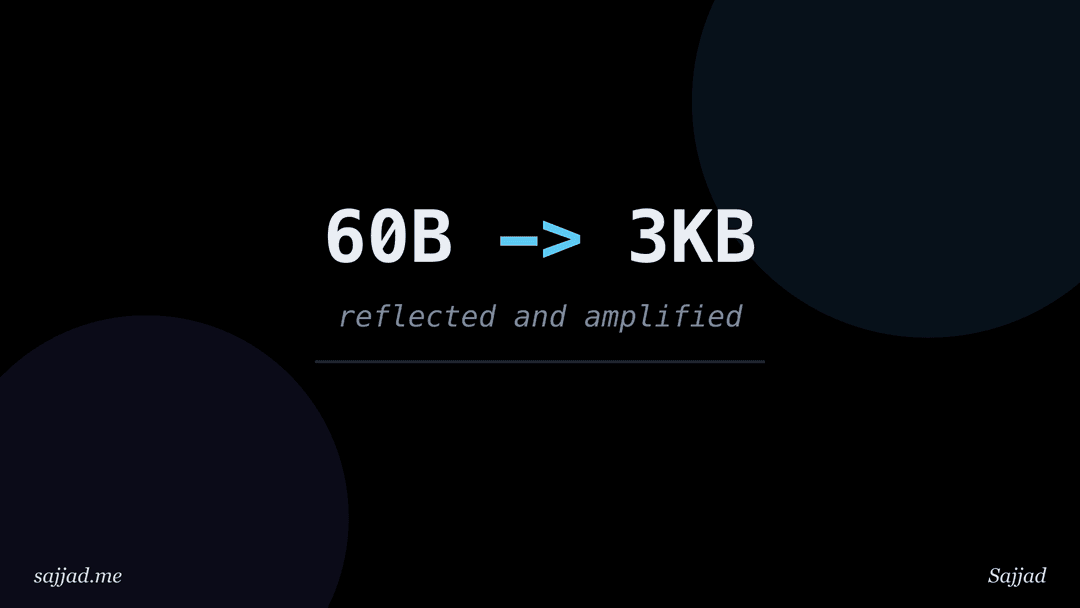
What is a DNS amplification DDoS attack?
A DNS amplification attack is a type of distributed denial-of-service (DDoS) attack in which an attacker sends small DNS queries to many DNS servers
Dive Deeper
What is a DNS firewall and do you need one?
A DNS firewall is a recursive resolver that enforces security rules on DNS traffic, blocking, rewriting or logging lookups for domains, IP addresses
Dive Deeper
What is a DNS rebinding attack?
A DNS rebinding attack is a technique that lets a malicious website use your browser to reach services on your private network or your own computer,
Dive Deeper
What is a DNS resolver and what does it do?
A DNS resolver is the server (or piece of software) that answers DNS questions on behalf of your devices. When your laptop wants the IP address for `
Dive Deeper
What is a DNS sinkhole?
A DNS sinkhole is a DNS server, or a set of rules on one, that gives false answers for specific domains on purpose, so that traffic meant for a malic
Dive Deeper
What is a DNS zone and a zone file?
A DNS zone is a portion of the DNS namespace that's managed as a single unit by one administrator and served by the same set of authoritative nam
Dive Deeper
What is a DNS zone transfer (AXFR) and why should you restrict it?
A DNS zone transfer is the mechanism that copies a DNS zone from a primary nameserver to its secondary nameservers, so they can all answer fo
Dive Deeper
What is a fully qualified domain name (FQDN)?
A fully qualified domain name (FQDN) is the complete, unambiguous name of a host or service in DNS, spelling out every label from the host itself all
Dive Deeper
What is a glue record and why is it required?
A glue record is an A or AAAA record for a nameserver that the parent zone publishes alongside a delegation, so resolvers can find the namese
Dive Deeper
What is a PTR record and how does reverse DNS work?
A PTR (pointer) record is a DNS record that maps an IP address back to a hostname. It's the opposite of an A or AAAA record: instead of asking "what
Dive Deeper
What is a top-level domain (TLD) name server?
A top-level domain (TLD) name server is an authoritative DNS server for a TLD such as .com, .org, .uk or .dev. It sits one level below the ro
Dive Deeper
What is a TXT record and what is it used for?
A TXT record is a DNS record that holds free-form text attached to a domain name. It was originally meant for human-readable notes, but today it's mo
Dive Deeper
What is a wildcard DNS record and when should you use one?
A wildcard DNS record is a record whose leftmost label is an asterisk, such as *.example.com, that answers queries for any name under that domain w
Dive Deeper
What is an A record and when should you use it?
An A record (address record) is a DNS record that maps a hostname, such as example.com or www.example.com, to an IPv4 address, such as `192.0.2.1
Dive Deeper
What is an AAAA record and how does IPv6 DNS work?
An AAAA record (pronounced "quad-A") is a DNS record that maps a hostname to an IPv6 address, such as 2001:db8:10::1. It's the IPv6 equivalent
Dive Deeper
What is an ALIAS or ANAME record?
An ALIAS or ANAME record is a provider-specific DNS record that lets you point a name, usually your root domain such as example.com, at another **h
Dive Deeper
What is an authoritative name server?
An authoritative name server is a DNS server that holds the official, original records for a domain and answers questions about that domain from its
Dive Deeper
What is an MX record and how does email routing work?
An MX (Mail Exchanger) record is a DNS record that tells other mail servers which server accepts email for your domain. When someone sends a message
Dive Deeper
What is an NS record and how does DNS delegation work?
An NS (Name Server) record is a DNS record that names the servers holding the authoritative data for a zone. NS records are what make delegation
Dive Deeper
What is an SOA record and what do its fields mean?
An SOA (Start of Authority) record is the first and mandatory record in every DNS zone. It identifies the zone's primary nameserver and the administr
Dive Deeper
What is an SRV record and which services use it?
An SRV (service) record is a DNS record that tells clients which host and port provide a particular service for a domain. Where an A record only
Dive Deeper
What is Anycast DNS and how does it improve performance?
Anycast DNS is a way of running DNS servers where the same IP address is announced from many locations around the world at once, and the internet
Dive Deeper
What is BIMI and how does it show your logo in email?
BIMI (Brand Indicators for Message Identification) is an email standard that lets supporting inboxes, such as Gmail, Apple Mail and Yahoo, display yo
Dive Deeper
What is CNAME flattening and why do you need it?
CNAME flattening is a technique where your authoritative DNS server follows a CNAME chain itself and returns the final A and AAAA records to the clie
Dive Deeper
What is DNS spoofing (cache poisoning) and how to prevent it?
DNS spoofing is any attack that makes a device or resolver accept a forged DNS answer, and cache poisoning is the most damaging form of it: the a
Dive Deeper
What is DNS caching and why does it matter?
DNS caching is the practice of storing the answer to a DNS lookup for a set period of time, so the next request for the same name can be answered imm
Dive Deeper
What is DNS failover and how does it keep sites online?
DNS failover is a setup where your DNS provider continuously checks whether your main server is healthy and, if it stops responding, automatically ch
Dive Deeper
What is DNS filtering and how does it block threats?
DNS filtering is a security control that checks every domain a device tries to look up against lists of known malicious, risky or unwanted sites, and
Dive Deeper
What is DNS hijacking and how is it different from domain hijacking?
DNS hijacking is an attack that changes how a domain name resolves, so users are sent to an attacker's server, usually by tampering with the resolver
Dive Deeper
What is DNS load balancing?
DNS load balancing is a way of spreading traffic across several servers by publishing more than one IP address for the same hostname, or by varying w
Dive Deeper
What is DNS over HTTPS (DoH)?
DNS over HTTPS (DoH) is a protocol that sends DNS queries and responses inside ordinary encrypted HTTPS connections, instead of as plain-text packets
Dive Deeper
What is DNS prefetching and how to use it on your website?
DNS prefetching is a browser technique that resolves a domain name to its IP address before the page actually requests anything from it. You enable i
Dive Deeper
What is DNS propagation and why does it take so long?
DNS propagation is the period after you change a DNS record during which some people see the new value and others still see the old one. Despite the
Dive Deeper
What does SERVFAIL mean and how do you fix it?
SERVFAIL is a DNS response code that means "server failure": the DNS server you asked couldn't produce a valid answer. Unlike NXDOMAIN, it doesn't sa
Dive Deeper
What is DNS tunneling and how do attackers use it?
DNS tunneling is a technique that hides other data inside DNS queries and responses. Instead of using DNS only to look up names, a program encodes in
Dive Deeper
What is DNS and how does it work?
DNS (the Domain Name System) is the internet's naming system. It translates human-friendly names such as example.com into the numeric IP addresses,
Dive Deeper
What is dynamic DNS (DDNS) and when do you need it?
Dynamic DNS (DDNS) is a way of keeping a DNS record pointed at a device whose IP address changes. A small client, running on your router, a server or
Dive Deeper
What is EDNS Client Subnet (ECS)?
EDNS Client Subnet (ECS) is a DNS extension that lets a recursive resolver include part of the end user's IP address, such as the first 24 bits of an
Dive Deeper
What is GeoDNS and how does location-based routing work?
GeoDNS is a technique where an authoritative DNS server gives different answers to the same query depending on where the request appears to come from
Dive Deeper
What is a lame delegation and how do you fix it?
A lame delegation happens when a domain's parent zone (such as .com) lists a nameserver for the domain, but that nameserver doesn't actually serve
Dive Deeper
What is negative caching in DNS?
Negative caching in DNS is when a resolver remembers that something doesn't exist. If a resolver asks for new.example.com and the authoritative
Dive Deeper
What is secondary DNS and why should you use it?
Secondary DNS is a setup where one or more additional authoritative nameservers hold a read-only copy of your DNS zone, copied automatically from a p
Dive Deeper
What is split-horizon DNS?
Split-horizon DNS (also called split-brain or split-view DNS) is a setup where the same domain name resolves to different answers depending on who's
Dive Deeper
What is a subdomain takeover and how to prevent dangling DNS records?
A subdomain takeover happens when one of your DNS records still points at an external resource, such as a cloud storage bucket, a hosting app or a lo
Dive Deeper
What is TTL in DNS and how should you set it?
TTL (time to live) in DNS is a number, in seconds, attached to every DNS record that tells resolvers how long they may cache that record before askin
Dive Deeper
What is typosquatting and how to protect your brand's domain?
Typosquatting is the practice of registering domain names that are slight misspellings or lookalikes of a real brand's domain, such as exmaple.com
Dive Deeper