I've dedicated years of my life to learning new technologies. I have a high-level understanding of many different things and can pick up and learn.

Sajjad
What is the difference between an A record and a CNAME record?
The difference between an A record and a CNAME record is what they point to. An A record points a hostname directly at an IPv4 address, such
Dive Deeper
How to make typography accessible?
- Sajjad
- Typography
- 11 Oct, 2026
You make typography accessible by choosing clear typefaces, setting text in relative units so it scales with user preferences, giving it enough colou
Dive Deeper
What are the parts of a letterform?
- Sajjad
- Typography
- 11 Oct, 2026
A letterform is the shape of a single letter, and typographers break it down into named parts. The main ones are the stem (the main vertical
Dive Deeper
What are ascenders, descenders and the baseline?
- Sajjad
- Typography
- 11 Oct, 2026
The baseline is the invisible line that letters sit on. Ascenders are the parts of lowercase letters that rise above the x-height, such as th
Dive Deeper
What is a baseline grid and how do you use one on the web?
- Sajjad
- Typography
- 11 Oct, 2026
A baseline grid is a set of evenly spaced horizontal lines, usually one body line height apart, on which every line of text in a layout sits. Bod
Dive Deeper
What is the best base font size for websites?
- Sajjad
- Typography
- 11 Oct, 2026
For most websites the best base font size is 16px, which is also the default size every major browser uses for body text. It is large enough to r
Dive Deeper
What are the best DNS providers for websites?
The best DNS providers for most websites are Cloudflare for a fast, free, easy starting point, Amazon Route 53 if you already run on AWS, **G
Dive Deeper
What are the best fonts for body text on the web?
- Sajjad
- Typography
- 11 Oct, 2026
The best fonts for body text on the web are typefaces designed for continuous reading on screens: they have a generous x-height, open letter shap
Dive Deeper
What are the best fonts for coding and code blocks?
- Sajjad
- Typography
- 11 Oct, 2026
The best fonts for coding are monospace typefaces with clearly distinguished characters, a generous x-height and good rendering at small sizes. P
Dive Deeper
What are the best fonts for dashboards and data-heavy interfaces?
- Sajjad
- Typography
- 11 Oct, 2026
The best fonts for dashboards are neutral, screen-optimised sans-serifs with tabular figures, clear distinctions between similar characters and a
Dive Deeper
What are the best fonts for e-commerce websites?
- Sajjad
- Typography
- 11 Oct, 2026
The best fonts for e-commerce websites are highly legible sans-serifs with clear numerals and a good range of weights, such as Inter, DM Sans, Ma
Dive Deeper
What are the best fonts for headings?
- Sajjad
- Typography
- 11 Oct, 2026
The best fonts for headings are typefaces with enough character to stand out at large sizes, clear shapes that stay legible in short bursts, and
Dive Deeper
What are the best free fonts for commercial use?
- Sajjad
- Typography
- 11 Oct, 2026
The best free fonts for commercial use are open-licensed families such as Inter, Source Sans 3, IBM Plex, Lato, Work Sans and Public Sans for san
Dive Deeper
What are the best Google Fonts for websites?
- Sajjad
- Typography
- 11 Oct, 2026
The best Google Fonts for most websites are well-crafted, widely tested families such as Inter, Source Sans 3, Roboto, Open Sans, Noto Sans and W
Dive Deeper
What are the best public DNS resolvers?
The best public DNS resolvers for most people are Cloudflare (1.1.1.1) for speed and privacy, Google Public DNS (8.8.8.8) for reliability and
Dive Deeper
What are the best WordPress security plugins?
- Sajjad
- WordPress, Security
- 12 Sep, 2026
The best WordPress security plugins for most sites are Wordfence, Sucuri Security, Solid Security, MalCare, All-In-One Security (AIOS), Patchstack, a
Dive Deeper
How to choose heading sizes for a website?
- Sajjad
- Typography
- 11 Oct, 2026
To choose heading sizes for a website, start from your body text size, decide how many heading levels you actually use, and give each level a siz
Dive Deeper
What is typography for CJK languages?
- Sajjad
- Typography
- 11 Oct, 2026
CJK typography is the practice of setting Chinese, Japanese and Korean text, three writing systems that share Han characters and a square, grid-b
Dive Deeper
Cloudflare DNS vs Amazon Route 53: which is better?
Neither Cloudflare DNS nor Amazon Route 53 is better in every case. Cloudflare is usually the better choice for public websites that want fast, f
Dive Deeper
What are the most common DNS mistakes that take websites offline?
The most common DNS mistakes that take websites offline are letting the domain expire, changing nameservers without copying every record to the new p
Dive Deeper
What are the most common typography mistakes on websites?
- Sajjad
- Typography
- 11 Oct, 2026
The most common typography mistakes on websites are body text that's too small or too low in contrast, lines that run too long, line height that'
Dive Deeper
What are the most common website security threats?
The most common website security threats are vulnerable or outdated software, weak and stolen passwords, malware infections, injection attacks like S
Dive Deeper
How to set up custom fonts in WordPress?
- Sajjad
- Typography
- 11 Oct, 2026
You set up custom fonts in WordPress in one of three main ways, depending on your theme. In a block theme, you can upload or install fonts throug
Dive Deeper
How does dark mode affect typography?
- Sajjad
- Typography
- 11 Oct, 2026
Dark mode typography behaves differently from light mode because light text on a dark background appears bolder, brighter and slightly larger tha
Dive Deeper
How to design readable tables?
- Sajjad
- Typography
- 11 Oct, 2026
To design readable tables, align text to the left and numbers to the right, use tabular numerals so digits line up, give cells enough padding to
Dive Deeper
What is the difference between posts and pages in WordPress?
The main difference between posts and pages in WordPress is that posts are timely, dated entries that appear in your blog feed, archives, and RSS fee
Dive Deeper
What is the DNS hierarchy explained simply?
The DNS hierarchy is the tree-shaped structure that organises every domain name on the internet. At the very top is the root, written as a single
Dive Deeper
What is DNS over TLS (DoT) and how does it compare to DoH?
DNS over TLS (DoT) is a protocol that wraps ordinary DNS queries in a TLS-encrypted connection to your resolver, using its own dedicated port, **TCP
Dive Deeper
What are DNS records and what are the different types?
DNS records are the individual entries stored in a domain's DNS zone. Each one maps a name to a specific piece of information, such as an IP address,
Dive Deeper
What is the difference between DNS and DHCP?
DNS and DHCP are two separate network services that work closely together. DHCP (Dynamic Host Configuration Protocol) automatically gives a devic
Dive Deeper
Does DNS affect website speed and SEO?
Yes, DNS affects website speed, and it can affect SEO, but mostly in indirect ways. Every new visitor's browser has to look up your domain before it
Dive Deeper
What is the difference between a domain and a DNS zone?
A domain is a name in the DNS tree together with everything beneath it: example.com as a domain includes www.example.com, mail.example.com,
Dive Deeper
Why are my emails bouncing after a DNS change?
Emails usually bounce after a DNS change because a mail-related record was lost or altered in the move. The most common causes are MX records that we
Dive Deeper
How to use emoji in web typography?
- Sajjad
- Typography
- 11 Oct, 2026
To use emoji well in web typography, treat them as text: they're Unicode characters drawn by colour fonts, so they follow your font stack, size and l
Dive Deeper
What is fluid typography and how do you build it with clamp()?
- Sajjad
- Typography
- 11 Oct, 2026
Fluid typography is an approach where font sizes grow and shrink smoothly with the width of the viewport, instead of jumping between fixed sizes
Dive Deeper
What is the font-display property and which value should you use?
- Sajjad
- Typography
- 11 Oct, 2026
font-display is a descriptor you add inside an @font-face rule to tell the browser what to do with text while that font is still downloading. I
Dive Deeper
How to use the @font-face rule?
- Sajjad
- Typography
- 11 Oct, 2026
To use the @font-face rule, declare it in your CSS with at least two descriptors: font-family, which gives the font a name you choose, and `src
Dive Deeper
What are font fallbacks and how do you tune them with size-adjust?
- Sajjad
- Typography
- 11 Oct, 2026
A font fallback is the font a browser uses when your preferred font isn't available, either because it hasn't finished downloading yet or because
Dive Deeper
What is a font family and what are font weights?
- Sajjad
- Typography
- 11 Oct, 2026
A font family is a group of related fonts that share the same design, such as Roboto Regular, Roboto Italic, Roboto Bold and Roboto Black. Each m
Dive Deeper
How to use the CSS font-feature-settings property?
- Sajjad
- Typography
- 11 Oct, 2026
The font-feature-settings property gives you direct, low-level control over OpenType features in a font. You write a comma-separated list of four
Dive Deeper
What is font subsetting and how does it reduce file size?
- Sajjad
- Typography
- 11 Oct, 2026
Font subsetting is the process of creating a smaller version of a font file that contains only the characters, and optionally the OpenType featur
Dive Deeper
How to use font weight to create hierarchy?
- Sajjad
- Typography
- 11 Oct, 2026
You use font weight to create hierarchy by making the most important text heavier and the least important text lighter, so readers can tell what
Dive Deeper
How to choose fonts that match your brand personality?
- Sajjad
- Typography
- 11 Oct, 2026
To choose fonts that match your brand personality, start by writing down three to five traits the brand should convey, then translate each trait
Dive Deeper
What are the best fonts for dyslexic readers?
- Sajjad
- Typography
- 11 Oct, 2026
The best fonts for dyslexic readers are clear, familiar sans-serif typefaces with distinct letter shapes, open spacing and a generous x-height, s
Dive Deeper
How to choose fonts for email newsletters?
- Sajjad
- Typography
- 11 Oct, 2026
To choose fonts for email newsletters, start from fonts that are already installed on readers' devices, such as Arial, Helvetica, Georgia, Verdan
Dive Deeper
What is FOUT and FOIT and how do you prevent them?
- Sajjad
- Typography
- 11 Oct, 2026
FOUT (flash of unstyled text) is when a page first shows text in a fallback font and then switches to the web font once it has downloaded. **FOIT
Dive Deeper
Free vs premium DNS hosting: is paid DNS worth it?
Paid DNS is worth it when downtime directly costs you money, when you need features such as health-checked failover, geo-routing or secondary DNS, or
Dive Deeper
How does GDPR affect website security?
GDPR affects website security by turning it from a good habit into a legal obligation. If your website collects personal data from people in the EU (
Dive Deeper
What is hanging punctuation and how do you use it in CSS?
- Sajjad
- Typography
- 11 Oct, 2026
Hanging punctuation is the practice of placing certain punctuation marks, most often opening quotation marks, just outside the edge of a text blo
Dive Deeper
What is the history of typography from Gutenberg to the web?
- Sajjad
- Typography
- 11 Oct, 2026
The history of typography in the West is usually traced from Johannes Gutenberg, who developed a practical system of movable metal type in Mainz
Dive Deeper
How do CDNs use DNS to route traffic?
CDNs use DNS as the switch that decides which of their servers each visitor connects to. When you put a site behind a CDN, you either point a hostnam
Dive Deeper
How does DNS work inside Docker and Kubernetes?
Inside Docker, containers on a user-defined network use Docker's embedded DNS server at 127.0.0.11, which resolves other containers and Compose
Dive Deeper
How does server-side rendering work in Next.js?
In an era where web applications are becoming increasingly complex, delivering a seamless user experience is paramount. This is where the concept of
Dive Deeper
How do font licenses work?
- Sajjad
- Typography
- 11 Oct, 2026
A font licence is a legal agreement that sets out how you may use a piece of font software: where you can install it, which media you can use it
Dive Deeper
What is malware and how does it infect websites?
Malware is any malicious software designed to harm, exploit, or take control of a system, and on a website it usually takes the form of hidden code p
Dive Deeper
How many fonts should you use on one website?
- Sajjad
- Typography
- 11 Oct, 2026
Most websites should use one or two typefaces, and rarely more than three. A single well-chosen family can handle body text, headings and interfa
Dive Deeper
How much does it cost to build a WordPress website?
Building a WordPress website can cost anywhere from roughly the price of a domain and a year of budget hosting, if you do it yourself with free tools
Dive Deeper
How much does website security cost?
Website security can cost anything from nothing at all to several thousand dollars a year, depending on how complex your site is, what data it handle
Dive Deeper
How often should you perform website security updates?
You should check for website security updates at least once a week, apply critical security patches within 24 to 72 hours of their release, and handl
Dive Deeper
How to add CAPTCHA to WordPress login and forms?
- Sajjad
- WordPress, Security
- 10 Sep, 2026
To add CAPTCHA to WordPress, pick a CAPTCHA service (Google reCAPTCHA, hCaptcha, or Cloudflare Turnstile), create a free site key and secret key in t
Dive Deeper
How to add a contact form to WordPress website?
A contact form is a crucial component for any website, and this holds true especially for WordPress sites. It serves as a
Dive Deeper
How to add a cookie consent banner to WordPress?
The simplest way to add a cookie consent banner to WordPress is to install a consent management plugin such as Complianz, CookieYes, Cookiebot, or Re
Dive Deeper
How to add custom CSS to WordPress?
The quickest way to add custom CSS to WordPress is through the built-in editor for your theme type. With a block theme, go to **Appearance > Editor >
Dive Deeper
How to add a custom logo and favicon in WordPress?
To add a custom logo in WordPress, use the Site Logo block in the Site Editor if you have a block theme, or go to **Appearance > Customize > Site Ide
Dive Deeper
How to add dark mode to a WordPress website?
You can add dark mode to a WordPress website in three main ways: install a dark mode plugin such as WP Dark Mode, write CSS that uses the `prefers-co
Dive Deeper
How to add an email newsletter signup to WordPress?
To add an email newsletter signup to WordPress, you connect your site to an email marketing service (such as Mailchimp, MailPoet, Kit, or Brevo) and
Dive Deeper
How to add image galleries in WordPress?
The quickest way to add an image gallery in WordPress is with the built-in Gallery block: open a post or page, add a Gallery block, select or upl
Dive Deeper
How to add new users to a WordPress site?
To add a new user to a WordPress site, log in as an Administrator, go to Users > Add New User, fill in a username and email address, choose a rol
Dive Deeper
How to add schema markup to a WordPress website?
You can add schema markup to a WordPress website in three main ways: let an SEO plugin like Yoast SEO, Rank Math, or All in One SEO generate it autom
Dive Deeper
How to add HTTP security headers to WordPress?
- Sajjad
- WordPress, Security
- 11 Sep, 2026
You can add HTTP security headers to WordPress in four main ways: with Header always set directives in your .htaccess file on Apache or LiteSpeed
Dive Deeper
How to add social media sharing buttons to WordPress?
The easiest way to add social media sharing buttons to WordPress is to install a sharing plugin such as AddToAny Share Buttons, Jetpack, Grow Social,
Dive Deeper
How to add a table of contents to WordPress posts?
The easiest way to add a table of contents to WordPress posts is with a plugin such as Easy Table of Contents, LuckyWP Table of Contents, or the tabl
Dive Deeper
How to allow guest posting on a WordPress blog?
The simplest way to allow guest posting on a WordPress blog is to create a user account with the Contributor role for each guest writer. Contribu
Dive Deeper
How to audit your DNS records for security risks?
To audit your DNS records for security risks, start by exporting a complete inventory of every zone and record you own, then work through a checklist
Dive Deeper
How to set up automatic logout for idle users in WordPress?
- Sajjad
- WordPress, Security
- 10 Sep, 2026
The easiest way to set up automatic logout for idle users in WordPress is to install a plugin such as Inactive Logout, set a timeout like 15 or 30 mi
Dive Deeper
How to automate DNS record changes with an API?
To automate DNS record changes with an API, create a scoped API token at your DNS provider, then send authenticated HTTP requests to its DNS endpoint
Dive Deeper
How to back up a WordPress website?
Backing up your WordPress website is an essential task that ensures the security and integrity of your valuable content. Whether you're running a per
Dive Deeper
How to block PHP execution in WordPress upload folders?
- Sajjad
- WordPress, Security
- 11 Sep, 2026
To block PHP execution in the WordPress uploads folder, place an .htaccess file inside wp-content/uploads/ that denies access to files ending in
Dive Deeper
How To build an e-commerce website with WordPress?
In today's digital age, having an online presence is crucial for businesses of all sizes, especially those in the e-commerce realm. With the ever-inc
Dive Deeper
How to change the nameservers for your domain?
To change the nameservers for your domain, first set up the new DNS provider and recreate all of your existing records there. Then log in to your **d
Dive Deeper
How to change the WordPress admin username?
WordPress doesn't let you edit a username from the dashboard, so to change the admin username you have to use a workaround. The simplest is to create
Dive Deeper
How to change the WordPress database table prefix?
- Sajjad
- WordPress, Security
- 07 Sep, 2026
To change the WordPress database table prefix, you rename every table that starts with the old prefix (usually wp_), update the $table_prefix val
Dive Deeper
How to change the default WordPress login URL?
- Sajjad
- WordPress, Security
- 08 Sep, 2026
The easiest way to change the default WordPress login URL is to install a lightweight plugin such as WPS Hide Login, choose a new slug like `/my-team
Dive Deeper
How to change your WordPress site title and tagline?
To change your WordPress site title and tagline, log in to your dashboard, go to Settings > General, edit the Site Title and Tagline fiel
Dive Deeper
How to check DNS propagation worldwide?
To check DNS propagation worldwide, first confirm that your domain's authoritative nameservers are serving the new record, then query a spread of pub
Dive Deeper
How to check the DNS records for any domain?
To check the DNS records for any domain, use a lookup tool and ask for each record type by name. On macOS or Linux, run dig example.com MX (or A,
Dive Deeper
How to check if a WordPress plugin is safe to use?
- Sajjad
- WordPress, Security
- 13 Sep, 2026
To check if a WordPress plugin is safe, download it only from WordPress.org or the developer's official site, confirm it's actively maintained and te
Dive Deeper
How to choose a font for your website?
- Sajjad
- Typography
- 11 Oct, 2026
To choose a font for your website, start with the job it has to do, then filter candidates by readability, language support, available weights an
Dive Deeper
How to choose a managed DNS provider for your business?
To choose a managed DNS provider for your business, start by writing down your requirements: the cost of downtime, where your users are, the record t
Dive Deeper
How to choose a WordPress theme?
WordPress themes play a pivotal role in dictating the aesthetic and functional essence of your website. Embarking on the jou
Dive Deeper
How to configure DNS for a staging or development site?
To configure DNS for a staging or development site, the simplest approach is to create a subdomain such as staging.example.com and point it at your
Dive Deeper
How to configure a firewall with UFW on a Linux server?
To configure a firewall with UFW on a Linux server, install it with sudo apt install ufw, set the default policies to deny incoming and allow outgo
Dive Deeper
How to configure WordPress settings after installation?
After installing WordPress, you should work through the screens under Settings in your dashboard: set your site title, timezone, and date format
Dive Deeper
How to connect a custom domain to your WordPress site?
To connect a custom domain to your WordPress site, you point the domain at your hosting by either changing its nameservers to your host's nameservers
Dive Deeper
How to connect a custom domain to Vercel using DNS?
To connect a custom domain to Vercel, add the domain in your project under Settings > Domains, then create the DNS records Vercel shows you at yo
Dive Deeper
How to create a custom Gutenberg block?
To create a custom Gutenberg block, you scaffold a plugin with the official @wordpress/create-block tool, describe the block in a block.json file
Dive Deeper
How to create a custom WordPress theme from scratch?
To create a custom WordPress theme from scratch, you create a new folder in wp-content/themes, add a style.css file with a theme header, and then
Dive Deeper
How to create a landing page in WordPress?
To create a landing page in WordPress, add a new page under Pages > Add New Page, choose a distraction-free template (such as a blank or "no head
Dive Deeper
How to create a multilingual WordPress website?
In today's globalized world, businesses and organizations are increasingly seeking to expand their reach and connect with audiences across different
Dive Deeper
How to create a WordPress plugin from scratch?
To create a WordPress plugin from scratch, you make a folder inside wp-content/plugins/, add a PHP file with a special comment block called the plu
Dive Deeper
How to create a custom navigation menu in WordPress?
To create a custom navigation menu in WordPress, use the Navigation block in the Site Editor if you have a block theme, or go to **Appearance > Menus
Dive Deeper
How to create custom post types in WordPress?
You can create a custom post type in WordPress in two ways: with a plugin such as Custom Post Type UI, Advanced Custom Fields (ACF), or Pods, which g
Dive Deeper
How to create a custom user registration form in WordPress?
You can create a custom user registration form in WordPress in two main ways: use a plugin such as WPForms, Gravity Forms, User Registration & Member
Dive Deeper
How to create reusable blocks (synced patterns) in WordPress?
To create a reusable block in WordPress, select the block (or group of blocks) you want to reuse in the editor, click the three-dot Options menu
Dive Deeper
How to create an XML sitemap in WordPress?
WordPress already creates an XML sitemap for you. Since WordPress 5.5, every site automatically generates one at `https://yourdomain.com/wp-sitemap.x
Dive Deeper
How to customize the WordPress login page?
You can customize the WordPress login page in two ways: use a plugin such as LoginPress or Custom Login Page Customizer to change the logo, backgroun
Dive Deeper
How to diagnose slow DNS resolution?
To diagnose slow DNS resolution, first measure it: time a lookup with dig and read the Query time line, or use curl -w '%{time_namelookup}' t
Dive Deeper
How to disable directory browsing in WordPress?
- Sajjad
- WordPress, Security
- 09 Sep, 2026
To disable directory browsing in WordPress on an Apache or LiteSpeed server, add the single line Options -Indexes to the .htaccess file in your s
Dive Deeper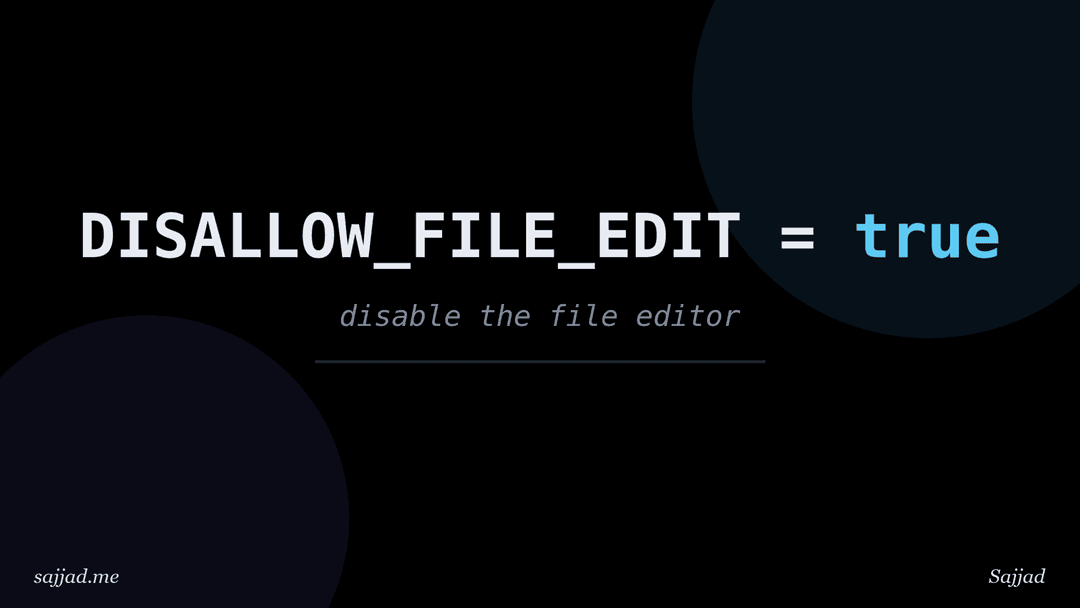
How to disable file editing in the WordPress dashboard?
- Sajjad
- WordPress, Security
- 06 Sep, 2026
To disable file editing in the WordPress dashboard, add define( 'DISALLOW_FILE_EDIT', true ); to your wp-config.php file, above the line that say
Dive Deeper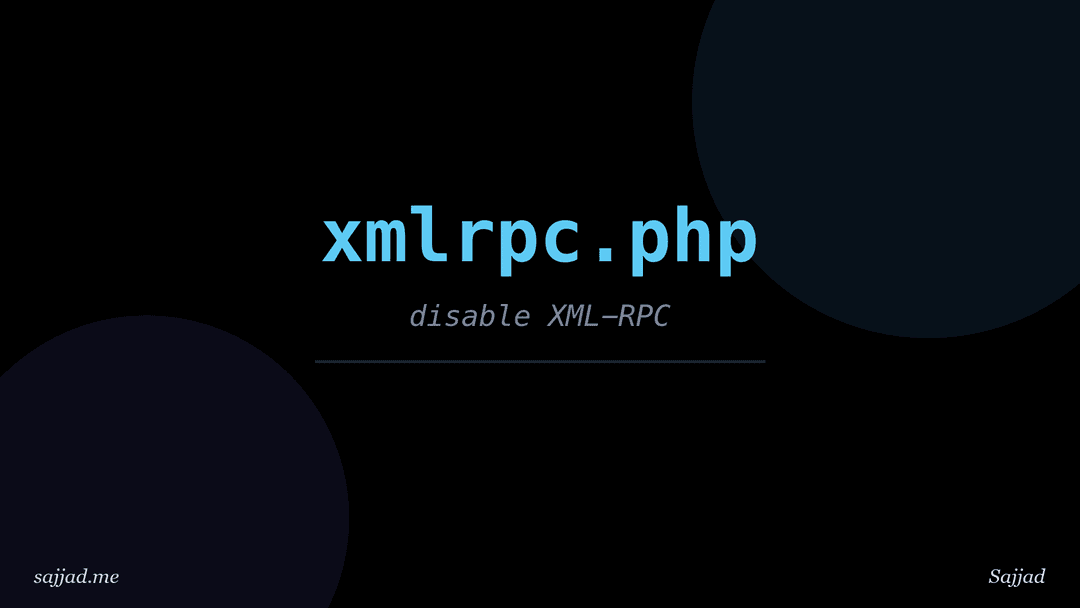
How to disable XML-RPC in WordPress?
- Sajjad
- WordPress, Security
- 07 Sep, 2026
To disable XML-RPC in WordPress, you can install a small plugin such as Disable XML-RPC-API, add the xmlrpc_enabled filter to a custom plugin or yo
Dive Deeper
How to embed videos in WordPress?
To embed a video in WordPress, copy the video's URL from a site like YouTube or Vimeo and paste it on its own line in the block editor. WordPress aut
Dive Deeper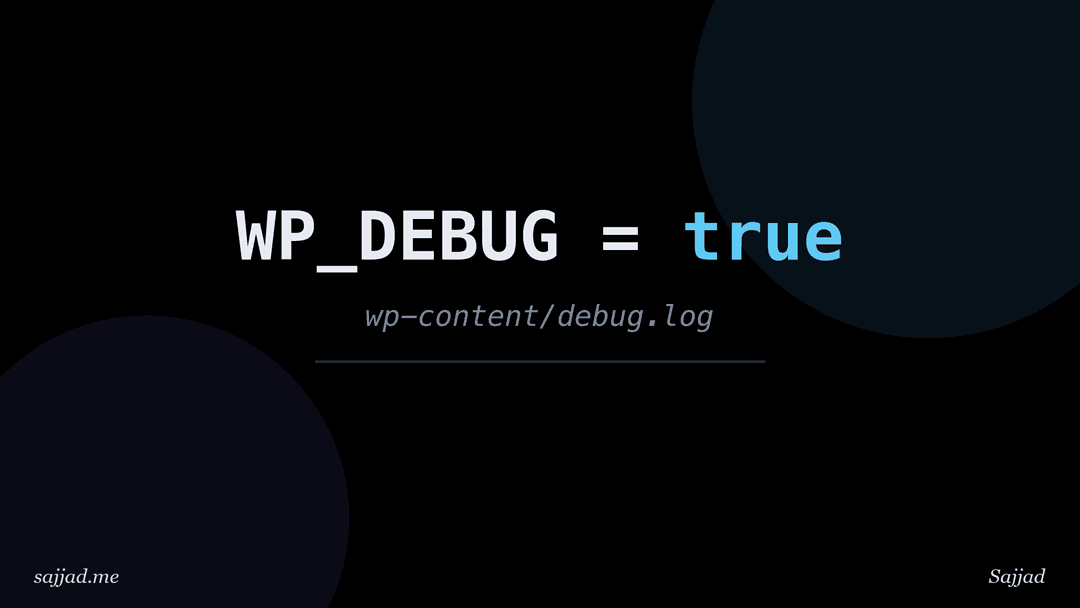
How to enable debug mode in WordPress?
To enable debug mode in WordPress, open your site's wp-config.php file and change define( 'WP_DEBUG', false ); to define( 'WP_DEBUG', true );.
Dive Deeper
How to enable two-factor authentication in WordPress?
To enable two-factor authentication (2FA) in WordPress, install a trusted 2FA plugin such as Two Factor, Wordfence Login Security, or WP 2FA, then op
Dive Deeper
How to encrypt sensitive data on a website?
You encrypt sensitive data on a website in three places: in transit, by serving everything over HTTPS with modern TLS; at rest, by encrypting the dis
Dive Deeper
How to export and back up your DNS zone file?
To export and back up your DNS zone file, use your DNS provider's export feature, either the "Export" button in the dashboard or the equivalent API o
Dive Deeper
How to fix 404 errors on WordPress posts?
If your WordPress posts suddenly return "404 Not Found" while your homepage still works, the most common fix is simply to go to **Settings > Permalin
Dive Deeper
How to fix DNS conflicts between CNAME and other records?
To fix a DNS conflict between a CNAME and other records, you need to make sure the name that holds the CNAME has no other records at all. Either
Dive Deeper
How to fix the DNS_PROBE_FINISHED_NXDOMAIN error?
DNS_PROBE_FINISHED_NXDOMAIN is an error shown by Chrome and other Chromium-based browsers when a DNS lookup for the website's domain returns **NXDOMA
Dive Deeper
How to fix the "DNS server not responding" error?
The "DNS server not responding" error means your computer sent DNS queries to its configured DNS server but got no reply, so it can't turn website na
Dive Deeper
How to fix ERR_NAME_NOT_RESOLVED in Chrome?
ERR_NAME_NOT_RESOLVED is Chrome's error for "I couldn't find an IP address for this website's name". To fix it, first check the address for typos and
Dive Deeper
How to fix the "Error establishing a database connection" in WordPress?
The "Error establishing a database connection" message means WordPress tried to talk to its MySQL or MariaDB database and failed. In most cases, the
Dive Deeper
How to fix image upload issues in WordPress?
Most WordPress image upload issues come from a handful of causes: the file is larger than your server allows, the uploads folder has the wrong permis
Dive Deeper
How to clean up the Japanese keyword hack in WordPress?
- Sajjad
- WordPress, Security
- 15 Sep, 2026
To clean up the Japanese keyword hack in WordPress, you need to remove the injected spam pages and the malicious code that generates them, replace co
Dive Deeper
How to fix mixed content warnings on a website?
To fix mixed content warnings, you find every resource on your HTTPS pages that still loads over plain http://, such as images, scripts, stylesheet
Dive Deeper
How to fix the "This site may be hacked" warning in Google?
- Sajjad
- WordPress, Security
- 14 Sep, 2026
To fix the "This site may be hacked" warning in Google, verify your site in Google Search Console, open the Security issues report to see what Go
Dive Deeper
How to find and fix vulnerable WordPress plugins?
- Sajjad
- WordPress, Security
- 13 Sep, 2026
To find vulnerable WordPress plugins, run a vulnerability scan with a tool like Wordfence, Patchstack, Jetpack Protect, or Solid Security, or compare
Dive Deeper
How to fix the white screen of death in WordPress?
To fix the white screen of death in WordPress, start by checking your admin email for a recovery mode link, then turn on debugging in wp-config.php
Dive Deeper
How to fix WordPress redirect hacks?
- Sajjad
- WordPress, Security
- 15 Sep, 2026
To fix a WordPress redirect hack, you need to find and remove every piece of injected code that sends visitors to another site, then close the hole t
Dive Deeper
How to flush the DNS cache on Windows, Mac, Linux and browsers?
To flush the DNS cache, run ipconfig /flushdns in an administrator Command Prompt on Windows, `sudo dscacheutil -flushcache; sudo killall -HUP mDNS
Dive Deeper
How to force strong passwords for WordPress users?
- Sajjad
- WordPress, Security
- 10 Sep, 2026
WordPress suggests strong passwords but doesn't enforce them, because any user can tick the "Confirm use of weak password" checkbox and save somethin
Dive Deeper
How to safely give developers access to your website?
To safely give developers access to your website, create a separate account for each developer instead of sharing your own logins, grant only the acc
Dive Deeper
How to harden wp-config.php for better security?
- Sajjad
- WordPress, Security
- 06 Sep, 2026
To harden wp-config.php, you restrict who can read it, block direct web access to it, move it or its secrets out of the public web root where possi
Dive Deeper
How to hide the WordPress version number?
- Sajjad
- WordPress, Security
- 08 Sep, 2026
To hide the WordPress version number, remove the generator meta tag with remove_action( 'wp_head', 'wp_generator' ), empty the generator output in
Dive Deeper
How to import and export content in WordPress?
To export content in WordPress, go to Tools > Export, choose whether to export all content or just posts, pages, or media, and click **Download E
Dive Deeper
How to improve Core Web Vitals on a WordPress site?
To improve Core Web Vitals on a WordPress site, you need to make your main content appear faster (Largest Contentful Paint), make the page respond qu
Dive Deeper
How to increase the PHP memory limit in WordPress?
To increase the PHP memory limit in WordPress, add define( 'WP_MEMORY_LIMIT', '256M' ); to your wp-config.php file, just above the line that says
Dive Deeper
How to install and configure Fail2Ban?
To install and configure Fail2Ban, install the package (sudo apt install fail2ban on Ubuntu and Debian, or sudo dnf install fail2ban from EPEL on
Dive Deeper
How to install WordPress locally on Windows and macOS?
The easiest way to install WordPress locally on Windows or macOS is to use a free desktop app such as Local (by WP Engine) or WordPress Studio (by Au
Dive Deeper
How to install WordPress on my own hosting?
WordPress is the most popular content management system (CMS) in the world, powering millions of websites. Installing WordPress on your own hosting g
Dive Deeper
How to keep a Linux web server updated and patched?
To keep a Linux web server updated and patched, you install security updates from your distribution's package manager on a regular schedule, enable a
Dive Deeper
How to keep website backups safe from hackers?
To keep website backups safe from hackers, store them away from the website server, encrypt them, make at least one copy immutable so it can't be cha
Dive Deeper
How to limit login attempts in WordPress?
- Sajjad
- WordPress, Security
- 07 Sep, 2026
To limit login attempts in WordPress, install a dedicated plugin such as Limit Login Attempts Reloaded or Loginizer, set a maximum number of failed l
Dive Deeper
How to lower TTL before a website migration?
To lower TTL before a website migration, find the current TTL on the records you're going to change, then reduce it to a short value such as 300 seco
Dive Deeper
How to make a WordPress website secure?
- Sajjad
- WordPress, Security
- 08 May, 2024
In today's digital age, website security is paramount. With the widespread use of content management systems (CMS) like WordPress, securing your webs
Dive Deeper
How to manage comments in WordPress?
Your website’s comment section is more than just a feature; it is the digital town square for your brand. It is where your audience transforms from p
Dive Deeper
How to manage DNS for multiple domains efficiently?
To manage DNS for multiple domains efficiently, start with an inventory of every domain, its registrar and its DNS provider, then consolidate them on
Dive Deeper
How to manage DNS as code with Terraform?
To manage DNS as code with Terraform, you configure the Terraform provider for your DNS host (for example cloudflare/cloudflare or hashicorp/aws
Dive Deeper
How to manage website passwords securely?
You manage website passwords securely by keeping every credential in a reputable password manager, making each one long, random, and unique, protecti
Dive Deeper
How to monetize a WordPress blog?
You can monetize a WordPress blog in several ways: display advertising through networks like Google AdSense, Mediavine, or Raptive; affiliate marketi
Dive Deeper
How to monitor WordPress activity logs?
- Sajjad
- WordPress, Security
- 13 Sep, 2026
To monitor WordPress activity logs, install an activity log plugin such as WP Activity Log, Simple History, or Stream, since WordPress doesn't keep a
Dive Deeper
How to monitor WordPress website uptime?
To monitor WordPress website uptime, you sign up for an external uptime monitoring service such as UptimeRobot, Better Stack, Pingdom, or Jetpack's D
Dive Deeper
How to move an existing website to WordPress?
In today's digital landscape, having a robust and user-friendly website is paramount for any business or individual looking to establish a strong onl
Dive Deeper
How to move your DNS hosting without downtime?
To move your DNS hosting without downtime, recreate every record from your current zone at the new provider before you touch the nameservers, the
Dive Deeper
How to move WordPress from HTTP to HTTPS?
To move WordPress from HTTP to HTTPS, first install an SSL certificate on your hosting account (most hosts offer free Let's Encrypt certificates). Th
Dive Deeper
How to optimize images in WordPress?
To optimize images in WordPress, you resize them to the dimensions your theme actually displays, compress them to reduce file size, serve them in mod
Dive Deeper
How to clean up and optimize the WordPress database?
To clean up and optimize the WordPress database, you first take a full backup, then remove unnecessary data like old post revisions, auto-drafts, tra
Dive Deeper
How to optimize a WordPress website for SEO?
In the ever-evolving digital landscape, optimizing your website for search engines has become an indispensable strategy for success. With [WordPress
Dive Deeper
How to pair fonts effectively?
- Sajjad
- Typography
- 11 Oct, 2026
To pair fonts effectively, combine typefaces that are clearly different in one or two noticeable ways, such as serif versus sans-serif or express
Dive Deeper
How to protect the wp-admin directory with a password?
- Sajjad
- WordPress, Security
- 08 Sep, 2026
You can protect the wp-admin directory with a password by enabling HTTP Basic Authentication on your web server. On Apache, that means creating an `.
Dive Deeper
What is a website security audit and how to perform one?
A website security audit is a structured review of everything that affects your site's security: the software you run, who has access, how your serve
Dive Deeper
How to point your domain to a new web host?
To point your domain to a new web host, get the new server's IP address (or the hostname the host gives you), then go to wherever your domain's DNS i
Dive Deeper
How to preload fonts correctly?
- Sajjad
- Typography
- 11 Oct, 2026
To preload a font correctly, add a link element with rel="preload", as="font", type="font/woff2" and the crossorigin attribute to the `
Dive Deeper
How to prevent email spoofing from your domain?
You prevent email spoofing from your domain by publishing three DNS records that let receiving mail servers verify your messages: SPF (which servers
Dive Deeper
How to prevent user enumeration in WordPress?
- Sajjad
- WordPress, Security
- 09 Sep, 2026
To prevent user enumeration in WordPress, you need to close the handful of places where usernames leak: block ?author= query scans, hide the `/wp-j
Dive Deeper
How to protect your domain name from hijacking?
To protect your domain name from hijacking, you secure the registrar account that controls it with a strong unique password and two-factor authentica
Dive Deeper
How to protect website login pages from bots?
You protect website login pages from bots by making automated attempts slow, expensive, and pointless: rate limit login requests per IP and per accou
Dive Deeper
What is ransomware and how to protect your website from it?
Ransomware is malicious software that locks you out of your own files or data, usually by encrypting them, and then demands a payment in exchange for
Dive Deeper
How to put a WordPress site in maintenance mode?
To put a WordPress site in maintenance mode, the easiest option is to install a plugin like SeedProd, LightStart, or Maintenance, turn on maintenance
Dive Deeper
How to recover a hacked WordPress website?
To recover a hacked WordPress website, you need to contain the damage, take a snapshot for investigation, reset every password, replace WordPress cor
Dive Deeper
How to redirect a root domain to www?
To redirect a root domain such as example.com to www.example.com, you need two things: DNS records that send both names to a server, and an **HTT
Dive Deeper
How to regenerate thumbnails in WordPress?
To regenerate thumbnails in WordPress, you can install the free Regenerate Thumbnails plugin and run it from Tools > Regenerate Thumbnails, or us
Dive Deeper
How to remove a backdoor from a WordPress website?
- Sajjad
- WordPress, Security
- 14 Sep, 2026
To remove a backdoor from a WordPress website, back up the site, put it in maintenance mode, and replace WordPress core, plugins, and themes with fre
Dive Deeper
How to remove a website from the Google Safe Browsing blacklist?
To remove a website from the Google Safe Browsing blacklist, confirm the flag with Google's Safe Browsing site status tool, then open the **Security
Dive Deeper
How to reset a lost WordPress admin password?
The easiest way to reset a lost WordPress admin password is to click "Lost your password?" on the login screen, enter your username or email, and fol
Dive Deeper
How to respond to a website security incident?
To respond to a website security incident, stay calm and work through a clear sequence: confirm what is happening, contain the damage so it cannot sp
Dive Deeper
How to run your own DNS server with BIND or CoreDNS?
To run your own DNS server, install BIND 9 (sudo apt install bind9) or CoreDNS on at least two servers in different locations, write a zone
Dive Deeper
How to scan a WordPress website for malware?
- Sajjad
- WordPress, Security
- 12 Sep, 2026
To scan a WordPress website for malware, start with a free remote scanner such as Sucuri SiteCheck to check what visitors see, then run a server-side
Dive Deeper
How to schedule posts in WordPress?
To schedule a post in WordPress, open the post in the block editor, click the Publish date ("Immediately") in the settings sidebar, pick a future
Dive Deeper
How to secure a VPS for hosting websites?
To secure a VPS for hosting websites, update the operating system, create a non-root sudo user, switch SSH to key-based authentication and disable ro
Dive Deeper
How to secure an Apache web server?
To secure an Apache web server, keep Apache updated, hide its version and OS details, disable modules you don't use, serve everything over HTTPS with
Dive Deeper
How to secure cPanel hosting accounts?
To secure a cPanel hosting account, you protect the login itself with a strong, unique password and two-factor authentication, remove or restrict ext
Dive Deeper
How to secure a MySQL database server?
To secure a MySQL database server, you keep it off the public internet, remove default accounts and test databases, give each application its own use
Dive Deeper
How to secure an Nginx web server?
To secure an Nginx web server, keep Nginx updated, hide its version number, serve everything over HTTPS with TLS 1.2 and 1.3 only, add security heade
Dive Deeper
How to secure PHP settings on a web server?
To secure PHP settings on a web server, you edit the php.ini configuration (or a per-site pool file) to hide version information, stop showing erro
Dive Deeper
How to secure SSH access on a web server?
To secure SSH access on a web server, use key-based authentication and disable password logins, block direct root login, allow only specific users or
Dive Deeper
How to secure a website's admin panel?
You secure a website's admin panel by making it hard to reach, hard to log into, and limited in what it can do once someone is inside. That means req
Dive Deeper
How to secure website forms from spam and abuse?
You secure website forms from spam and abuse by combining several layers: a hidden honeypot field and a privacy-friendly CAPTCHA to stop bots, rate l
Dive Deeper
How to secure WooCommerce stores?
- Sajjad
- WordPress, Security
- 15 Sep, 2026
To secure a WooCommerce store, keep card data off your server by using a hosted or tokenized payment gateway, lock down admin and shop manager accoun
Dive Deeper
How to secure WordPress Multisite networks?
- Sajjad
- WordPress, Security
- 16 Sep, 2026
To secure a WordPress Multisite network, keep the number of Super Admins to a minimum and protect them with two-factor authentication, control which
Dive Deeper
How to secure the WordPress REST API?
- Sajjad
- WordPress, Security
- 09 Sep, 2026
To secure the WordPress REST API, don't switch it off entirely, because the block editor and many plugins depend on it. Instead, require authenticati
Dive Deeper
How to secure WordPress with .htaccess rules?
- Sajjad
- WordPress, Security
- 11 Sep, 2026
You can secure WordPress with .htaccess rules by adding directives to the .htaccess file in your site's root (outside the # BEGIN WordPress blo
Dive Deeper
How to self-host web fonts?
- Sajjad
- Typography
- 11 Oct, 2026
To self-host web fonts, you download the font files in WOFF2 format, put them in a folder on your own server or in your build output, and declare
Dive Deeper
How to set a static homepage in WordPress?
To set a static homepage in WordPress, create two pages (for example "Home" and "Blog"), then go to Settings > Reading, choose A static page
Dive Deeper
How to set up a subdomain using DNS?
To set up a subdomain using DNS, log in to the provider that hosts your domain's DNS and add a record whose name is the subdomain label, such as
Dive Deeper
How to set up a firewall for a WordPress website?
- Sajjad
- WordPress, Security
- 12 Sep, 2026
To set up a firewall for a WordPress website, choose at least one web application firewall (WAF) layer: a plugin-based firewall like Wordfence that r
Dive Deeper
How to set up a WordPress staging site?
A WordPress staging site is a private copy of your live website where you can test updates, new plugins, design changes, and code before your visitor
Dive Deeper
How to set up DNS records for Google Workspace email?
To set up DNS records for Google Workspace email, add five records at your domain's DNS provider: a TXT verification record that proves you own t
Dive Deeper
How to set up DNS records for Microsoft 365?
To set up DNS records for Microsoft 365, add your domain in the Microsoft 365 admin centre and create the records it lists at your DNS provider: a **
Dive Deeper
How to set up DNS records for Shopify, Wix or Squarespace?
To set up DNS records for Shopify, Wix or Squarespace, you point your domain at the platform with two kinds of records at your DNS provider: one or m
Dive Deeper
How to set up Google Analytics on WordPress?
Understanding your website's performance is crucial for growth. You need to know who visits your site, how they find you, what content resonates with
Dive Deeper
How to set up free SSL with Let's Encrypt?
To set up free SSL with Let's Encrypt, you point your domain's DNS at your server, install an ACME client such as Certbot, and run a single command t
Dive Deeper
How to set up custom private nameservers for your domain?
To set up custom private nameservers such as ns1.example.com and ns2.example.com, you need at least two IP addresses that run (or front) an autho
Dive Deeper
How to set up SSH key authentication?
To set up SSH key authentication, generate a key pair on your local computer with ssh-keygen -t ed25519, copy the public key to your server with `s
Dive Deeper
How to set up WordPress Multisite?
To set up WordPress Multisite, back up your site, add define( 'WP_ALLOW_MULTISITE', true ); to wp-config.php, then go to *Tools > Network Setup
Dive Deeper
How to speed up a WordPress website?
In today's fast-paced digital world, the speed of your WordPress website can make or break your online presence. A slow-loading site not only frustra
Dive Deeper
How to protect WordPress from spam registrations?
- Sajjad
- WordPress, Security
- 11 Sep, 2026
To protect WordPress from spam registrations, first decide whether you need open registration at all, and turn it off in Settings > General if yo
Dive Deeper
How to test your website for security vulnerabilities?
To test your website for security vulnerabilities, combine several methods: run an automated vulnerability scanner against a staging copy of the site
Dive Deeper
How to troubleshoot a WordPress error?
As a WordPress user, encountering errors can be frustrating and disruptive. Whether you're a blogger, an e-commerce store owner, or managing a corpor
Dive Deeper
How to update WordPress and it's themes and plugins?
In the ever-evolving digital landscape, keeping your WordPress website updated is crucial for maintaining its security, performance, and functionalit
Dive Deeper
How to use a CDN with WordPress?
To use a CDN with WordPress, you either route your whole domain through a proxy CDN like Cloudflare by changing your nameservers, or you create a "pu
Dive Deeper
How to use categories and tags in WordPress?
To use categories and tags in WordPress, you assign each post to one or more broad categories (your site's main topics) and add a handful of specific
Dive Deeper
How to use Cloudflare to protect your website?
You use Cloudflare to protect your website by moving your domain's DNS to Cloudflare, turning on the orange-cloud proxy for your web records, and the
Dive Deeper
How to use the dig command to troubleshoot DNS?
To use the dig command to troubleshoot DNS, run dig name type, such as dig example.com A, and read the status in the header and the records
Dive Deeper
How to use nslookup on Windows, macOS and Linux?
To use nslookup, open a terminal (Command Prompt or PowerShell on Windows, Terminal on macOS or Linux) and type nslookup followed by a domain name,
Dive Deeper
How to keep your domain at one registrar and DNS with another provider?
To keep your domain at one registrar and your DNS with another provider, create a DNS zone for your domain at the DNS provider, add all your records
Dive Deeper
How to replace FTP with SFTP for secure file transfers?
To replace FTP with SFTP, you connect to your server using the SSH File Transfer Protocol on the SSH port (usually 22) instead of FTP on port 21, ide
Dive Deeper
How to use theme.json in WordPress?
To use theme.json in WordPress, create a file named theme.json in the root folder of your theme (or child theme) and add a JSON object with a `ve
Dive Deeper
How to use variable fonts in CSS?
- Sajjad
- Typography
- 11 Oct, 2026
To use a variable font in CSS, declare it once with @font-face and give each axis a range rather than a single value, for example `font-weight:
Dive Deeper
How to use WebP images in WordPress?
You can use WebP images in WordPress in three main ways: upload WebP files directly to the Media Library (supported natively since WordPress 5.8), le
Dive Deeper
How to use WordPress cron jobs?
WordPress cron jobs are scheduled tasks that WordPress runs automatically, such as publishing scheduled posts, checking for updates, deleting old tra
Dive Deeper
How to use WordPress for a membership website?
Building a membership website can be a rewarding venture, both personally and professionally. It allows you to create a community, generate revenue,
Dive Deeper
How to use the WordPress revisions feature?
To use WordPress revisions, open a post or page in the block editor, click the Revisions link in the settings sidebar, and WordPress shows you a
Dive Deeper
How to use WordPress with Next.js as a headless CMS?
To use WordPress with Next.js as a headless CMS, you keep WordPress as the place where content is written and managed, then build a Next.js App Route
Dive Deeper
How to verify domain ownership with a TXT record?
To verify domain ownership with a TXT record, copy the verification value the service gives you (for example google-site-verification=abc123...), l
Dive Deeper
How do web fonts affect page speed?
- Sajjad
- Typography
- 11 Oct, 2026
Web fonts affect page speed in three main ways: they add bytes to download, they're discovered late in the loading process because the browser on
Dive Deeper
How to control hyphenation on the web?
- Sajjad
- Typography
- 11 Oct, 2026
You control hyphenation on the web mainly with the CSS hyphens property. Set hyphens: auto to let the browser break words at dictionary-appro
Dive Deeper
What are icon fonts and should you still use them?
- Sajjad
- Typography
- 11 Oct, 2026
Icon fonts are font files in which the glyphs are pictograms instead of letters, so you can display an icon by rendering a character in that font
Dive Deeper
What is the ideal line length for readable text?
- Sajjad
- Typography
- 11 Oct, 2026
The ideal line length, also called the measure, for body text is roughly 45 to 75 characters per line, including spaces and punctuation, with abo
Dive Deeper
Is it legal to use any font on your website?
- Sajjad
- Typography
- 11 Oct, 2026
No, you can't legally use any font on your website. Embedding a font with @font-face means serving the font file to every visitor, which counts as
Dive Deeper
Is WordPress free?
WordPress, the world's most popular content management system (CMS), is renowned for its flexibility, user-friendliness, and vast array of features.
Dive Deeper
Is WordPress good for large enterprise websites?
Yes, WordPress can be an excellent choice for large enterprise websites, provided it's built and run like enterprise software. Major publishers, univ
Dive Deeper
The Importance of Mobile-Friendly Websites
In the digital age, mobile devices have become an integral part of our daily lives. With the increasing popularity of smartphones and tablets, people
Dive Deeper
What is the difference between italic and oblique type?
- Sajjad
- Typography
- 11 Oct, 2026
The difference is in how the letters are made. Italic type is a separately designed style with its own letterforms, usually influenced by handwri
Dive Deeper
What is kerning and how does it differ from tracking?
- Sajjad
- Typography
- 11 Oct, 2026
Kerning is the adjustment of space between specific pairs of letters so that they look evenly spaced, such as tucking the o under the arm of a
Dive Deeper
What is the difference between left-aligned and justified text?
- Sajjad
- Typography
- 11 Oct, 2026
Left-aligned text lines up on the left edge and leaves the right edge uneven, so every space between words is the same width. Justified text
Dive Deeper
What is letter spacing and when should you adjust it?
- Sajjad
- Typography
- 11 Oct, 2026
Letter spacing is the amount of space added or removed evenly between characters in a piece of text. In typography it's usually called tracking,
Dive Deeper
How to load fonts asynchronously without hurting Core Web Vitals?
- Sajjad
- Typography
- 11 Oct, 2026
To load fonts asynchronously without hurting Core Web Vitals, let text render immediately in a fallback font, fetch the font files early, and make su
Dive Deeper
What is the minimum font size for accessibility?
- Sajjad
- Typography
- 11 Oct, 2026
There is no official minimum font size for accessibility in WCAG. The guidelines require that text can be resized to 200% without breaking the pa
Dive Deeper
What is a modular type scale and how do you create one?
- Sajjad
- Typography
- 11 Oct, 2026
A modular type scale is a set of font sizes created by starting from a base size and repeatedly multiplying or dividing it by the same ratio. Wit
Dive Deeper
How to design typography for multilingual websites?
- Sajjad
- Typography
- 11 Oct, 2026
You design typography for multilingual websites by choosing fonts that support every script and language you publish in, marking up each page and
Dive Deeper
Nextjs Adding analytics
Performance is no longer a "nice to have" you tack on after launch. Core Web Vitals are a confirmed Google ranking signal, slow pages measurably kill
Dive Deeper
Nextjs Adopting Partial Prefetching
Prefetching is one of those Next.js features that quietly does a lot of work and gets almost none of the credit. Hover a <Link>, and Next.js has us
Dive Deeper
Nextjs after function
Some work genuinely shouldn't block a response — logging an analytics event, firing a webhook notification, writing an audit log entry. The user does
Dive Deeper
Setting up your Next.js project for AI coding agents
If you have spent any time pairing with an AI coding agent on a Next.js project, you have probably watched it confidently write code against an API t
Dive Deeper
Nextjs API Components
Every React framework eventually ends up shipping its own set of "special" components — the ones that aren't quite ordinary JSX, because they're doin
Dive Deeper
API Reference for Next.js Functions and Hooks
Beyond file conventions and directives, the App Router exposes a substantial set of importable functions and hooks — the actual verbs of the framewor
Dive Deeper
Next.js API Reference for the App Router
If you've spent any time in the Next.js docs, you've probably noticed they're split into very different kinds of pages. Some walk you through buildin
Dive Deeper
Next.js Implementing authentication
Authentication is one of those features every real application needs and almost nobody wants to build from scratch. Next.js doesn't ship an opinionat
Dive Deeper
Next.js Caching
If you learned Next.js caching a year or two ago, forget most of it. Up through Next.js 15, caching in the App Router was a tangle of overlapping mec
Dive Deeper
Next.js App router CSS
Every Next.js project eventually needs an answer to the same question: where does the CSS go? Unlike a plain Create React App setup where there was r
Dive Deeper
Next.js Deploying
Every Next.js tutorial ends the same way: npm run dev, the app works on localhost:3000, and the reader is left to figure out the rest on their ow
Dive Deeper
Next.js Error Handling
Every non-trivial application fails sometimes. A form submission hits a validation rule, an upstream API times out, a database query throws, or a com
Dive Deeper
Next.js Fetching Data
If you learned data fetching in the Pages Router, or in plain React, the App Router's approach can feel like it's asking you to unlearn a habit. Ther
Dive Deeper
Next.js Getting Started
If you open the official Next.js documentation for the first time, the "Getting Started" section looks deceptively small. It's really just a table of
Dive Deeper
Next.js Guides
If you've spent any time in the official Next.js documentation, you've probably noticed it's split into a few distinct zones that don't behave the sa
Dive Deeper
Next.js Image Optimization
Images are usually the heaviest thing on a web page, and they're also the easiest way to accidentally wreck your Core Web Vitals. A single unoptimize
Dive Deeper
Incremental Static Regeneration (ISR)
Static generation and server-side rendering used to be a hard fork in the road. You either prerendered a page at build time and served it instantly f
Dive Deeper
Next.js Installation
Every Next.js project starts the same way: one command, a handful of prompts, and a folder full of generated files. That simplicity is deceptive. The
Dive Deeper
Next.js Mutating Data
If you learned React before Server Components existed, "mutating data" probably meant one thing: write an API route, call it with fetch from a `use
Dive Deeper
Next.js Proxy
Every request that hits your Next.js app has to travel through routing, rendering, and eventually a response before it reaches the browser. Most of t
Dive Deeper
Nextjs Revalidating
Caching is only half the story. The moment you cache a database query, an API response, or a rendered component, you've created a second problem: at
Dive Deeper
Next.js Streaming
Streaming is the mechanism underneath nearly every other article in this series' caching and rendering coverage — Cache Components, instant navigatio
Dive Deeper
Next.js Upgrading
Next.js moves fast. The team ships canary builds almost daily, minor releases every few weeks, and a major version roughly once or twice a year. That
Dive Deeper
Implementing authentication with Cache Components
If you've already read a guide on "authentication in Next.js," you might assume this article is a rehash — sign up, log in, set a cookie, check it on
Dive Deeper
Using Next.js as a backend for your frontend
Most people reach for Next.js because they want to render a UI — Server Components, layouts, streaming HTML, the whole App Router experience. But the
Dive Deeper
next.js Building interactive apps
Every time a user clicks something in a Next.js app that triggers a Server Function, there's a gap. The network round-trip takes an unknown amount of
Dive Deeper
Next.js Building your application
Most developers treat next build as a black box. You run it, you wait, and either it prints a green checkmark or it doesn't. If it fails, you scrol
Dive Deeper
Next.js cacheLife Function
A use cache directive tells Next.js that something should be cached. cacheLife tells it for how long, and — less obviously — _how that durati
Dive Deeper
Next.js cacheTag
Caching data is only half the problem — the other half is invalidating exactly the right subset of it when something changes, without wiping out ever
Dive Deeper
Caching and Revalidating (Previous Model)
Next.js 16 introduced Cache Components, a new caching model built around the use cache directive that makes caching an explicit, opt-in decision ra
Dive Deeper
Next.js catchError
error.js catches errors for an entire route segment — but not every error boundary you need actually lines up with a route segment boundary. Someti
Dive Deeper
Configuring CI build caching
If you've ever watched a Next.js build run in CI and wondered why it takes three minutes on your laptop but twelve minutes on GitHub Actions, the ans
Dive Deeper
Client-side data fetching with SWR
Not everything in a Next.js App Router project belongs on the server. A product search box that fires a new request on every keystroke, a notificatio
Dive Deeper
Client-side data fetching with TanStack Query
TanStack Query (the library most people still call React Query out of habit) solves a problem that Server Components don't: what happens to data _aft
Dive Deeper
Client-side data fetching
Every Next.js App Router project eventually hits the same fork in the road: some piece of UI needs data that the server rendered version can't (or sh
Dive Deeper
Next.js Codemods
A codemod is a programmatic transformation applied across your codebase — the entire point being that when Next.js renames or restructures an API, yo
Dive Deeper
Next.js connection function
Next.js can usually tell a component needs per-request rendering because it calls a Request-time API like cookies() or headers() — that call itse
Dive Deeper
Setting a Content Security Policy (CSP)
Cross-site scripting is one of those vulnerabilities that sounds theoretical right up until it isn't. All it takes is one comment form, one rich-text
Dive Deeper
Next.js cookies function
Cookies are one of those primitives that seem simple until you actually need to read or write one from a server-rendered React tree. In a traditional
Dive Deeper
Next.js Using CSS-in-JS libraries
If you've spent any real time with styled-components, Emotion, or a similar runtime CSS-in-JS library, you already know the pitch: colocate your styl
Dive Deeper
Next.js Setting up a custom server
Every Next.js app already has a server. When you run next start, Next.js spins up an HTTP server for you, wires up its router, and handles every re
Dive Deeper
Next.js Data security in Next.js
For most of the framework's history, the security model of a React app was easy to reason about, whatever code ran in the browser was untrusted by de
Dive Deeper
Next.js Debugging tools
Most developers debug a Next.js app the same way they'd debug any React project: sprinkle in a few console.log calls, stare at the output, delete t
Dive Deeper
Next.js default.js
If you've never touched Parallel Routes, default.js is one of those files you'll never think about — and the moment you do touch Parallel Routes, y
Dive Deeper
Next.js Deploying to different platforms
"Can I deploy Next.js anywhere?" is the wrong question, and it's the one most teams ask. The right question is narrower: does the platform I'm consid
Dive Deeper
Next.js Directives
If you've spent any time in the App Router, you've typed 'use client' at the top of a file without thinking too hard about what that string literal
Dive Deeper
Next.js Draft Mode
If you've ever worked with a headless CMS, you already know the workflow: a content editor writes a draft, saves it, and then wants to see exactly ho
Dive Deeper
Nextjs draftMode function
If you've ever built a site backed by a headless CMS, you've hit this problem: an editor saves a draft, previews it, and it doesn't show up because y
Dive Deeper
Next.js Dynamic Route Segments
Most of the routes in a real application aren't known ahead of time. A blog doesn't have a finite list of URLs baked into its file structure — it has
Dive Deeper
Next.js dynamicParams
generateStaticParams tells Next.js which specific values of a dynamic segment to prerender at build time. But real traffic doesn't always stick to
Dive Deeper
Ensuring instant navigations
Every framework promises fast navigation. Next.js is one of the few that gives you a way to actually verify it, route by route, before a user ever co
Dive Deeper
Nextjs Environment variables
Every non-trivial application needs a way to keep secrets, connection strings, and per-environment settings out of the codebase. A database password
Dive Deeper
Next.js error.js
An error.js file gives a route segment its own React error boundary, automatically. Instead of manually wrapping trees of components in error-catch
Dive Deeper
Nextjs fetch function
Every Next.js developer meets fetch on day one, and most of them assume it behaves exactly like the fetch they already know from the browser. It
Dive Deeper
Next.js favicon, icon, and apple-icon
App icons look like the simplest possible piece of metadata to get right — drop an image somewhere, done — until you actually try to cover every surf
Dive Deeper
Next.js File-system conventions
Every framework has to answer one boring but load-bearing question: how does a folder full of files turn into a running application? Most React frame
Dive Deeper
Next.js Font Module
If you've already read a getting-started guide on fonts in Next.js, you know the basics: import a font from next/font/google, slap the className
Dive Deeper
Next.js Font Optimization
Web fonts have a reputation for quietly wrecking performance scores. You add a nice-looking Google Font to your project, ship it, and a week later so
Dive Deeper
Next.js forbidden function
Most tutorials on handling errors in Next.js focus on the easy case: the thing doesn't exist, so you show a 404. Far fewer talk about the case that a
Dive Deeper
Next.js forbidden.js
Most authorization failures in a web app fall into one of two buckets, and they deserve different responses: "you're not logged in" (401, please sign
Dive Deeper
Next.js Form Component
If you've spent any time with the App Router, you've probably already reached for Server Actions to handle form submissions — a user fills something
Dive Deeper
Next.js Creating forms with Server Actions
For most of the last decade, building a form in a React app meant the same ritual: wire up useState for every field, write an onSubmit handler th
Dive Deeper
Next.js generateImageMetadata
Most of the time, a favicon or an Open Graph image in a Next.js app is a single static file sitting next to a route: one icon.png, one `opengraph-i
Dive Deeper
Next.js generateMetadata function
Every page you ship eventually gets shared somewhere — pasted into Slack, tweeted, indexed by Google, unfurled in an iMessage thread. What determines
Dive Deeper
Next.js generateSitemaps
A single sitemap.xml file works fine right up until it doesn't. The sitemap protocol caps every file at 50,000 URLs (and 50MB uncompressed), and lo
Dive Deeper
Next.js generateStaticParams
Dynamic route segments like app/blog/[slug]/page.tsx are, by default, rendered on demand: the first time someone requests /blog/hello-world, Next
Dive Deeper
Next.js generateViewport
If you've ever squinted at a site on your phone because the text rendered tiny and zoomed-out, you've felt the absence of a proper viewport meta tag.
Dive Deeper
Next.js Handling redirects
"Just redirect the user" sounds like it should have one obvious answer, and in Next.js it deliberately doesn't — because "redirect after this form su
Dive Deeper
Next.js headers
Every incoming HTTP request carries a bundle of headers you never see in your component tree by default — the user-agent, the authorization token
Dive Deeper
Next.js How revalidation works
Most Next.js developers interact with revalidation at a very shallow level: you call revalidateTag() after a mutation, or you set a cacheLife pro
Dive Deeper
Next.js Image Component
Images are usually the single heaviest thing on a web page, and they are also the thing most likely to wreck your Core Web Vitals if you leave them u
Dive Deeper
Next.js ImageResponse
Every time a link to your site gets dropped into Slack, iMessage, or Twitter, something has to decide what the preview card looks like. For most site
Dive Deeper
Next.js instrumentation-client.js
Server-side instrumentation gets you visibility into requests, renders, and errors that happen before HTML ever reaches a browser. But a meaningful c
Dive Deeper
Next.js instrumentation.js
instrumentation.js is one of the smallest files in the App Router's convention vocabulary and one of the most disproportionately useful once you ac
Dive Deeper
Next.js Intercepting Routes
There's a specific kind of navigation almost every app eventually needs: clicking a photo in a feed should open it in a modal, right there, without l
Dive Deeper
Next.js Internationalization
Most frameworks that promise "internationalization support" actually mean one of two very different things: either they ship a router that understand
Dive Deeper
Next.js io
If you've enabled Cache Components in a Next.js 16 project, you've probably run into a build error that seems to come out of nowhere: a component tha
Dive Deeper
Next.js ISR with Cache Components
If you've been building with Next.js for a while, you've probably run into the same trade-off every team hits eventually: you have a catalog with ten
Dive Deeper
Next.js Implementing JSON-LD
If you've ever wondered how Google shows a recipe's star rating and cook time directly in search results, or how a product listing gets a price and s
Dive Deeper
Next.js layout.js
layout.js is the outermost wrapper in a route segment's component hierarchy — it sits above template.js, error.js, loading.js, not-found.js
Dive Deeper
Next.js Layouts and Pages
Every React project eventually asks the same question: how do URLs map to components? In the Pages Router, the answer was a flat mapping between a fi
Dive Deeper
Next.js Lazy loading Client Components and libraries
Every component you ship, every library you import, every icon set you pull in — all of it has to travel down the wire before a browser can do anythi
Dive Deeper
Next.js Link Component
Every Next.js app eventually comes down to one question: how does a visitor get from page A to page B without the whole browser reloading? The answer
Dive Deeper
Next.js Linking and Navigating
Every route in the Next.js App Router is rendered on the server by default. That single fact explains almost everything interesting about how navigat
Dive Deeper
Next.js Loading and optimizing scripts
A plain <script src="..."> tag is one of the easiest ways to quietly wreck a page's performance, because the browser's default behavior for it is a
Dive Deeper
Next.js loading.js
The gap between "the user clicked a link" and "the page they wanted is fully rendered" is where a lot of apps feel sluggish even when the underlying
Dive Deeper
Next.js Optimizing your local development environment
Every Next.js developer eventually hits the same wall: the app used to reload in a blink, and now every save takes a beat too long. You edit a compon
Dive Deeper
Next.js manifest.json
Every "Add to Home Screen" prompt, every PWA install banner, every app-like icon a browser shows for your site instead of just a generic bookmark — a
Dive Deeper
Next.js Using markdown and MDX
Markdown is the easiest way to write structured content without touching HTML, and if you've ever written a README, a changelog, or a blog post in a
Dive Deeper
Next.js maxDuration
Serverless execution environments generally enforce a hard ceiling on how long any single invocation is allowed to run — exceed it, and the platform
Dive Deeper
Next.js Enabling Next.js MCP Server for coding agents
Every AI coding assistant working on a Next.js project faces the same handicap: it can read your source files, but it has no idea what's actually hap
Dive Deeper
Next.js mdx-components.js
If you've configured @next/mdx in the App Router and your MDX files are rendering with completely unstyled HTML — plain black links, default browse
Dive Deeper
Next.js Metadata and OG images
Every page you ship eventually gets shared somewhere you don't control: pasted into a Slack channel, tweeted, dropped into a WhatsApp group, or index
Dive Deeper
Next.js Metadata Files API Reference
Search engines, social media crawlers, and browsers all expect a handful of specific files and head-tag conventions before they'll represent your sit
Dive Deeper
Next.js Migrating from Create React App
Create React App has been officially archived, and if you're still running a CRA project, you've probably noticed the signs even before that announce
Dive Deeper
Next.js Migrating from Vite
Vite earned its popularity for a good reason: it's fast, it has almost no configuration ceremony, and npm create vite gets you a working React app
Dive Deeper
Next.js Migrating
At some point, almost every React codebase outgrows the tool it started with. A Create React App project hits a wall when someone asks for server-ren
Dive Deeper
Next.js Migrating from Pages to the App Router
If you have a Next.js application that predates the App Router, you are sitting on more technical debt than you probably realize. The pages directo
Dive Deeper
Next.js Migrating to Cache Components
If you've been running a Next.js App Router project for a while, your codebase almost certainly has a scattering of `export const dynamic = 'force-dy
Dive Deeper
Next.js Building multi-tenant apps
If you check the official Next.js docs page for "Building multi-tenant apps," you'll find something unusual for this documentation set: it's one sent
Dive Deeper
Next.js Building micro-frontends with multi-zones
There's a particular kind of pain that shows up in large Next.js applications well before they become unmaintainable: build times creep up, the depen
Dive Deeper
Next.js NextRequest
Every Route Handler and every proxy.js file in a Next.js application receives a request object, and that object is not a plain Web Request. It's
Dive Deeper
Next.js NextResponse
If you've written a Route Handler or a proxy file in Next.js, you've almost certainly returned a NextResponse without stopping to think about what
Dive Deeper
Next.js not-found.js
Next.js actually gives you two distinct tools for "this doesn't exist" scenarios, and conflating them is the most common mistake people make with thi
Dive Deeper
Next.js notFound
Every app built on dynamic data eventually hits the same question: a user requests /blog/a-post-that-was-deleted or /user/999999, and your data l
Dive Deeper
Next.js Handling connectivity drops
Before this feature existed, a network drop mid-navigation or mid-Server-Action was just an error. The fetch throws, the promise rejects, and it's on
Dive Deeper
Next.js opengraph-image and twitter-image
The image that shows up when a link to your site is shared on Slack, Twitter/X, or iMessage isn't magic — it's read from specific <meta> tags (`og:
Dive Deeper
Next.js Instrumentation with OpenTelemetry
"Add some logging" is usually the first response to "we can't tell what's slow in production," and it's usually the wrong one past a certain scale. L
Dive Deeper
Next.js Optimizing memory usage
Every Next.js project starts out light. A handful of routes, a couple of dependencies, a next dev process that boots in under a second. Then, six m
Dive Deeper
Next.js Optimizing prefetching
There's a ceiling to how instant a navigation can feel once you've adopted Cache Components and Partial Prefetching: the shared App Shell prefetched
Dive Deeper
Next.js Optimizing third-party libraries
This article covers a narrower, more specific tool than it might sound like at first glance. If you've read the "How to incorporate third-party libra
Dive Deeper
Next.js Optimizing package bundling
Every kilobyte of JavaScript shipped to the browser is a kilobyte that has to be downloaded, parsed, and executed before your app is fully interactiv
Dive Deeper
Next.js page.js
Every other special file in the App Router's vocabulary — layout.js, template.js, loading.js, error.js — exists to wrap or coordinate somethi
Dive Deeper
Next.js Parallel Routes
Most routing systems assume a page renders one thing at one URL. That assumption breaks down the moment you build a dashboard with independently-upda
Dive Deeper
Next.js permanentRedirect
Every framework that handles routing eventually needs an answer to one specific question: "this URL used to point somewhere, and now it permanently p
Dive Deeper
Next.js Implementing Partial Prerendering on your platform
Most of the articles in this series are written for people building Next.js applications. This one isn't. If you're building a deployment platform, a
Dive Deeper
Next.js preferredRegion (deprecated)
This reference documents an officially deprecated option. It's included here for the practical reason every deprecated API reference exists: real
Dive Deeper
Next.js Prefetching
Every framework with client-side navigation makes some version of the same promise — "clicking a link feels instant" — and the mechanism behind that
Dive Deeper
Next.js Preserving UI state with Activity
Before Cache Components, keeping a page's state alive across a navigation and back required real effort: hoisting state up into a shared layout so it
Dive Deeper
Next.js Preventing flash before hydration
There's a specific category of UI bug that only exists because of server rendering, and it trips up almost everyone the first time they hit it: anyth
Dive Deeper
Next.js Production checklist
Every article in this series so far has covered one specific feature in depth. This one is different on purpose — it's the checklist you actually run
Dive Deeper
Next.js Building a Progressive Web App (PWA)
Native mobile apps have three things a website usually doesn't: a home-screen icon, the ability to send push notifications, and an app-like full-scre
Dive Deeper
Next.js Project structure and organization
Every Next.js project starts the same way: a fresh app directory with a page.tsx and a layout.tsx, and nothing else. It looks simple, almost to
Dive Deeper
Next.js proxy.js
If you've worked with an older Next.js codebase, you know this file by a different name: middleware.ts. As of Next.js 16, that convention is deprec
Dive Deeper
Next.js public Folder
Not everything in an app benefits from Next.js's rendering, caching, and optimization pipeline — sometimes you just need a file served exactly as-is,
Dive Deeper
Next.js Building public/static pages
A landing page, a product listing, a blog index — the common thread across all of them is that every visitor sees the same content. Nobody's landin
Dive Deeper
Next.js redirect
Every non-trivial Next.js app eventually needs to send a visitor somewhere other than the page they asked for — bounce an unauthenticated user to `/l
Dive Deeper
Next.js refresh
If you've spent any time with Server Actions in the Next.js App Router, you've probably noticed that the UI usually just "knows" to update itself aft
Dive Deeper
Next.js Rendering Philosophy
Every other article in this series covers a specific feature — how to cache something, how to stream something, how to structure a route for instant
Dive Deeper
Next.js revalidatePath
Every caching system eventually needs an escape hatch — a way to say "forget what you know about this one thing, go get it fresh." In Next.js, `reval
Dive Deeper
Next.js revalidateTag
Caching only earns its keep if you have a reliable way to say "this specific piece of data is now wrong, go get it again." revalidateTag is that me
Dive Deeper
Next.js robots.txt
robots.txt is the oldest, plainest piece of SEO infrastructure a site can have — a text file at a well-known path telling crawlers what they're all
Dive Deeper
Next.js next/root-params
Every Next.js developer runs into the same annoyance eventually: a route parameter that belongs to the whole application — a locale, a tenant slug, a
Dive Deeper
Next.js Route Groups
Not every folder in your app directory needs to correspond to a URL segment. As a project grows, you'll often want to organize routes by team, feat
Dive Deeper
Next.js Route Handlers
Every framework eventually has to answer the question "what if the client just needs raw JSON, not HTML?" In the Pages Router, the answer was API Rou
Dive Deeper
Next.js route.js
route.js is the file convention behind Route Handlers — the App Router's mechanism for defining custom request handlers for a given route, built di
Dive Deeper
Next.js Route Segment Config
Behind the friendly file conventions of the App Router — page.js, layout.js, route.js — sits a small set of plain exported variables that let y
Dive Deeper
Next.js instant
Prefetching promises fast navigations, but a prefetched route can still feel slow in practice if something inside it — an uncached fetch, a runtime A
Dive Deeper
Next.js prefetch
A <Link> component expresses intent — "prefetch this destination, and how eagerly." But the destination itself has no way to know, ahead of time, w
Dive Deeper
Next.js runtime
If you've read older Next.js material, you likely came across a real, meaningful choice here: render this segment on Node.js, or on the leaner, faste
Dive Deeper
Next.js Script Component
If you've read a guide on optimizing third-party scripts in Next.js, you already know the pitch: next/script gives you a strategy prop instead of
Dive Deeper
Next.js Self-hosting your application
Vercel built Next.js, and Vercel's platform is tuned to make every Next.js feature work with zero configuration. That convenience quietly shapes how
Dive Deeper
Next.js Server Actions and Mutations
The "Mutating Data" article earlier in this series covers how to write and call a Server Action — the tutorial-level mechanics. This one is the deepe
Dive Deeper
Next.js The Server and Client Boundary
The "Server and Client Components" article earlier in this series covers the basics — how to decide which one a piece of UI should be, the everyday c
Dive Deeper
Next.js Server and Client Components
If you have written even a small amount of App Router code, you have already run into the split between Server Components and Client Components, whet
Dive Deeper
Next.js Setting up instrumentation
Every production Next.js app eventually hits the same wall: something breaks in a way you can't reproduce locally, and by the time you find out about
Dive Deeper
Next.js Building single-page applications (SPAs)
There's a common assumption that "Next.js" and "SPA" describe opposite philosophies — one server-first, one client-first — and that adopting Next.js
Dive Deeper
Next.js sitemap.xml
A sitemap is how you hand search engines a structured, authoritative list of every URL on your site worth crawling — rather than relying entirely on
Dive Deeper
Next.js src Folder
By default, Next.js expects your app (or pages) directory to sit directly at your project root, alongside package.json, next.config.js, and e
Dive Deeper
Next.js Creating a static export
Sometimes the right amount of server infrastructure for a project is none at all. A marketing site, a documentation portal, a project that needs to r
Dive Deeper
Next.js Installing Tailwind CSS v3
This project runs Tailwind CSS 4, which is the version the official Next.js "getting started" docs point you toward by default now — so it's worth be
Dive Deeper
Next.js template.js
layout.js persists across navigations by design — that's precisely why it's useful for shared UI. But sometimes persistence is exactly what you _do
Dive Deeper
Next.js Setting up Cypress
Of the four testing tools covered in this series, Cypress is the one that does double duty out of the box — genuine End-to-End testing and component-
Dive Deeper
Next.js Setting up Jest
Jest paired with React Testing Library is the long-established default for unit and snapshot testing in the React ecosystem, and Next.js has carried
Dive Deeper
Next.js Testing
The official Next.js docs page for "Testing" is deliberately short — it's an orientation page, pointing to four separate, tool-specific setup guides
Dive Deeper
Next.js Setting up Playwright
Given how often this series has pointed toward "use E2E testing" as the answer for whatever a given unit-testing tool doesn't yet support — async Ser
Dive Deeper
Next.js Setting up Vitest
Vitest is the newer entrant among this series' four testing tools, built from the ground up around Vite's tooling rather than retrofitted onto an old
Dive Deeper
Next.js unauthorized
Every app with a login screen eventually needs a clean way to say "you're not signed in, go log in" from deep inside a Server Component, a Server Act
Dive Deeper
Next.js unauthorized.js
unauthorized.js completes a trio of authorization-adjacent special files alongside forbidden.js and the long-standing not-found.js — and of the
Dive Deeper
Next.js unstable_cache
If you've spent any time in a Next.js codebase written before the App Router's newer caching model matured, you've almost certainly run into `unstabl
Dive Deeper
Next.js unstable_noStore
Every so often you run into an API in the Next.js docs that's still fully functional, still shipped, still documented — and still flagged as somethin
Dive Deeper
Next.js unstable_rethrow
If you've ever wrapped a data fetch in a try/catch block and watched notFound() silently stop working, you've already run into the exact problem
Dive Deeper
Next.js updateTag
There's a specific kind of bug that makes an app feel broken even when nothing is technically wrong: a user submits a form, the page redirects to sho
Dive Deeper
Next.js Upgrade Guides
Like a few other index pages covered elsewhere in this series, the official "Upgrade Guides" page is short by design — it's a table of contents point
Dive Deeper
Next.js Upgrading to version 14
Of the three version-specific upgrade guides in this series, 13→14 is genuinely the smallest — a handful of removals and renames rather than the swee
Dive Deeper
Next.js Upgrading to version 15
This is the middle jump of the three major upgrades covered in this series, and it's the one where the ground genuinely shifts under a lot of existin
Dive Deeper
Next.js Upgrading to version 16
This is the most relevant of the three upgrade guides in this series for anyone reading this blog specifically, since this project itself runs Next.j
Dive Deeper
Next.js use cache
If you've read an introductory piece on caching in the App Router, you've probably seen 'use cache' dropped at the top of a function with a one-lin
Dive Deeper
Next.js use cache: private
Caching and personalization usually pull in opposite directions. Caching wants one answer you can hand out to everyone; personalization wants an answ
Dive Deeper
Next.js use cache: remote
If you've adopted Cache Components and started sprinkling 'use cache' through your app, you'll eventually hit a wall: some of your cached functions
Dive Deeper
Next.js use client
Every component in a Next.js App Router project starts life as a Server Component. That's the default, and it's a good one — it means your components
Dive Deeper
Next.js use server
If you've written a Server Action in Next.js before, you've already used use server without necessarily thinking hard about what it does. It's easy
Dive Deeper
uNext.js seLinkStatus
Click a link in a well-optimized Next.js app and, most of the time, nothing visible happens between the click and the new page appearing. That's the
Dive Deeper
Next.js useOffline
Every network-dependent app eventually hits the same UX problem: a user's connection drops mid-session, a request silently fails, and the interface g
Dive Deeper
Next.js useParams
Every dynamic route in the App Router hands its filled-in segments to the matching page.js and layout.js files as a params prop. That works fin
Dive Deeper
Next.js usePathname
Every app eventually needs a component that behaves differently depending on where the user currently is — a nav link that highlights itself when act
Dive Deeper
Next.js userAgent
Every incoming request carries a User-Agent header — a single, dense string like `Mozilla/5.0 (iPhone; CPU iPhone OS 17_4 like Mac OS X) AppleWebKi
Dive Deeper
Next.js useReportWebVitals
useReportWebVitals is the one hook in the Next.js API surface whose entire job is to hand you a stream of performance measurements as they become a
Dive Deeper
Next.js useRouter
Most navigation in a Next.js app doesn't need any JavaScript at all — you render a <Link>, the framework prefetches it, and clicking it just works.
Dive Deeper
Next.js useSearchParams
Every URL in a web app carries two kinds of information: the path, and everything after the ?. Next.js gives you a clean way to read the path (rout
Dive Deeper
Next.js useSelectedLayoutSegment
Every layout in the App Router renders a children prop it doesn't fully control — the actual page or nested layout underneath it is decided by what
Dive Deeper
Next.js useSelectedLayoutSegments
Breadcrumbs look like a solved problem until you actually try to build them inside a nested layout system. You can't just split `window.location.path
Dive Deeper
Next.js Using a CDN with Next.js
Putting a CDN in front of a Next.js app sounds like a five-minute job. Point your DNS at Cloudflare or Fastly, flip on caching, and enjoy sub-50ms re
Dive Deeper
Next.js Using Sass
This project runs on Tailwind CSS 4, which is worth saying upfront since it means everything in this article describes a path this specific codebase
Dive Deeper
Next.js Using and optimizing videos
Images get a dedicated, highly-optimized next/image component with automatic format conversion, resizing, and lazy loading built in. Video gets no
Dive Deeper
Next.js Designing view transitions
Route changes on the web have historically had no visual continuity — one full set of elements disappears, an entirely unrelated set appears, and not
Dive Deeper
What are nulled WordPress themes and plugins and why are they dangerous?
- Sajjad
- WordPress, Security
- 14 Sep, 2026
Nulled WordPress themes and plugins are pirated copies of premium products that have had their license checks removed so they can be used without pay
Dive Deeper
What are old-style and lining figures?
- Sajjad
- Typography
- 11 Oct, 2026
Old-style figures are numerals designed to behave like lowercase letters: some sit within the x-height, some rise above it like an ascender, and
Dive Deeper
What are OpenType features and how do you enable them in CSS?
- Sajjad
- Typography
- 11 Oct, 2026
OpenType features are optional typographic behaviours built into a font file, such as ligatures, true small caps, different styles of numerals, a
Dive Deeper
What are optical sizes in fonts?
- Sajjad
- Typography
- 11 Oct, 2026
Optical sizes are versions of a typeface designed for specific sizes of text, so that small type stays legible and large type stays refined. Desi
Dive Deeper
How to choose the right paragraph spacing?
- Sajjad
- Typography
- 11 Oct, 2026
To choose the right paragraph spacing, start from your body line height and set the gap between paragraphs to roughly the same value, so with 16p
Dive Deeper
What is PCI DSS compliance for websites that take payments?
PCI DSS compliance means meeting the Payment Card Industry Data Security Standard, a set of security requirements that applies to every business that
Dive Deeper
What is phishing and how does it target website owners?
Phishing is a social engineering attack where someone pretends to be a trusted company or person to trick you into handing over passwords, payment de
Dive Deeper
How to prevent layout shift caused by web fonts?
- Sajjad
- Typography
- 11 Oct, 2026
To prevent layout shift caused by web fonts, make the fallback font take up the same space as the web font, so nothing moves when one replaces th
Dive Deeper
What is the principle of least privilege for website access?
The principle of least privilege means that every person, program, and process connected to your website should have only the minimum access it needs
Dive Deeper
What is the difference between px, em and rem for font sizes?
- Sajjad
- Typography
- 11 Oct, 2026
The difference between px, em and rem is what each unit is measured against. A px value is an absolute CSS pixel and stays the same no matter w
Dive Deeper
What is the difference between readability and legibility?
- Sajjad
- Typography
- 11 Oct, 2026
Legibility is how easily a reader can recognise and distinguish individual characters, such as telling a capital I from a lowercase l or a `0
Dive Deeper
How to keep text readable on top of images?
- Sajjad
- Typography
- 11 Oct, 2026
You keep text readable on top of images by controlling the contrast between the text and whatever part of the image sits behind it. The most reli
Dive Deeper
What is the difference between recursive and iterative DNS queries?
The difference between recursive and iterative DNS queries is who does the work of finding the answer. In a recursive query, the client asks a DN
Dive Deeper
Registrar DNS vs third-party DNS: which should you use?
Use your registrar's DNS if you have a simple website, a handful of records and no need for advanced features, because it's free, already set up and
Dive Deeper
How to handle right-to-left typography?
- Sajjad
- Typography
- 11 Oct, 2026
To handle right-to-left typography, declare the language and direction in HTML with lang and dir="rtl", build your layout with logical CSS pr
Dive Deeper
What are script and handwritten fonts and when do they work?
- Sajjad
- Typography
- 11 Oct, 2026
Script fonts are typefaces that imitate writing made with a pen, nib or brush, usually with flowing strokes and letters that connect to one anoth
Dive Deeper
Should you self-host fonts or use Google Fonts?
- Sajjad
- Typography
- 11 Oct, 2026
For most production websites, self-hosting fonts is the better choice: it's usually as fast or faster than the Google Fonts API, it removes a thi
Dive Deeper
What is the difference between serif and sans-serif fonts?
- Sajjad
- Typography
- 11 Oct, 2026
The difference between serif and sans-serif fonts is whether the letters have serifs: small strokes or feet that finish the ends of the main
Dive Deeper
Shared hosting vs VPS: which is more secure?
A VPS is more secure than shared hosting in terms of isolation, because your site gets its own operating system and isn't sharing a server environmen
Dive Deeper
What are small caps and how do you use them properly?
- Sajjad
- Typography
- 11 Oct, 2026
Small caps are capital letterforms designed to be roughly the height of lowercase letters, with stroke weights and proportions that match the sur
Dive Deeper
What are SPF, DKIM and DMARC and how do you set them up?
SPF, DKIM and DMARC are three email authentication standards that you publish as DNS records on your domain. SPF lists which servers are allowed to s
Dive Deeper
How to style blockquotes and pull quotes?
- Sajjad
- Typography
- 11 Oct, 2026
To style a blockquote, set it apart from surrounding text with indentation, a left border or a subtle background, keep the font size close to bod
Dive Deeper
How to style lists for better readability?
- Sajjad
- Typography
- 11 Oct, 2026
To style lists for better readability, give items a little more space between them than lines within a paragraph, keep markers aligned in a hangi
Dive Deeper
What are system font stacks and when should you use them?
- Sajjad
- Typography
- 11 Oct, 2026
A system font stack is a CSS font-family list that tells the browser to use the fonts already installed on the visitor's operating system, usua
Dive Deeper
What are tabular and proportional numerals?
- Sajjad
- Typography
- 11 Oct, 2026
Tabular numerals are digits that all have exactly the same width, so numbers stack neatly in columns and don't shift when they change. **Proporti
Dive Deeper
How to test typography across devices and browsers?
- Sajjad
- Typography
- 11 Oct, 2026
To test typography across devices and browsers, start with a short matrix of the browser engines and operating systems your visitors use, then check
Dive Deeper
How much colour contrast does text need for WCAG?
- Sajjad
- Typography
- 11 Oct, 2026
Under WCAG 2.2 Level AA, normal text needs a colour contrast ratio of at least 4.5:1 against its background, and large text needs at least 3:1. L
Dive Deeper
How to use text-decoration properties for better links?
- Sajjad
- Typography
- 11 Oct, 2026
To make better links with text-decoration properties, keep the underline but refine it: set text-decoration-thickness to control how heavy the
Dive Deeper
How to use text-wrap: balance and text-wrap: pretty?
- Sajjad
- Typography
- 11 Oct, 2026
To use text-wrap: balance and text-wrap: pretty, add text-wrap: balance to short blocks such as headings, captions and pull quotes, and `text-w
Dive Deeper
How to truncate text with CSS ellipsis and line clamping?
- Sajjad
- Typography
- 11 Oct, 2026
To truncate text with CSS, use two different techniques depending on how many lines you want to keep. For a single line, combine `overflow: hidde
Dive Deeper
What are the main typeface classifications?
- Sajjad
- Typography
- 11 Oct, 2026
Typeface classifications group typefaces by their shared visual features and historical origins. The main families are serif typefaces, divided i
Dive Deeper
What is the difference between a typeface and a font?
- Sajjad
- Typography
- 11 Oct, 2026
A typeface is a design for a set of letters, numbers and symbols, such as Helvetica, Garamond or Inter. A font is a specific implementation o
Dive Deeper
How to design typography for older readers?
- Sajjad
- Typography
- 11 Oct, 2026
To design typography for older readers, you make text larger, darker and simpler than you might for a younger audience, and you make sure it can
Dive Deeper
How to create a typography style guide?
- Sajjad
- Typography
- 11 Oct, 2026
To create a typography style guide, document the fonts you use and why, define a fixed type scale, turn every size, weight, line height and spaci
Dive Deeper
What are the most important typography trends for 2026?
- Sajjad
- Typography
- 11 Oct, 2026
The most important typography trends for 2026 are less about a particular look and more about what browsers now make possible. Variable fonts hav
Dive Deeper
How to set up typography with Tailwind CSS?
- Sajjad
- Typography
- 11 Oct, 2026
To set up typography with Tailwind CSS, load your fonts with @font-face in your main CSS file, then register them as design tokens inside an `@
Dive Deeper
Understanding and Utilizing WordPress Plugins
WordPress stands as a beacon for web developers, bloggers, and business owners alike, offering a versatile platform to create and manage websites. Bu
Dive Deeper
What is vertical rhythm in web typography?
- Sajjad
- Typography
- 11 Oct, 2026
Vertical rhythm is the consistent, predictable spacing that runs from the top of a page to the bottom: the gaps between lines, paragraphs, headin
Dive Deeper
How to use viewport units for responsive typography?
- Sajjad
- Typography
- 11 Oct, 2026
To use viewport units for responsive typography, combine a viewport unit such as vw with a rem value and wrap the result in limits, for examp
Dive Deeper
What is visual hierarchy in typography?
- Sajjad
- Typography
- 11 Oct, 2026
Visual hierarchy in typography is the way you use differences in type, such as size, weight, colour, case, spacing and position, to show readers
Dive Deeper
What security features should a web host provide?
A good web host should provide, at minimum: strong isolation between customer accounts, regularly patched servers with current PHP and database versi
Dive Deeper
How to create a website disaster recovery plan?
You create a website disaster recovery plan by listing what could take your site down, deciding how quickly you need to be back online (your recovery
Dive Deeper
Why is my website not loading after changing DNS?
If your website isn't loading after you changed DNS, the most common reasons are that resolvers are still serving the old cached record, the new reco
Dive Deeper
How to create a website security checklist?
To create a website security checklist, start by listing everything your site depends on (hosting, domain, CMS, plugins, third-party services, and us
Dive Deeper
What are block patterns in WordPress and how to use them?
Block patterns are ready-made arrangements of blocks, such as a hero section, a pricing table, or a team grid, that you can insert into any post or p
Dive Deeper
What are block themes in WordPress?
Block themes are WordPress themes built entirely out of blocks. Instead of PHP template files like header.php and single.php, a block theme uses
Dive Deeper
What are custom fields in WordPress and how to use them?
Custom fields in WordPress are extra pieces of information, stored as key and value pairs, that you attach to a post, page, or custom post type. For
Dive Deeper
What are display fonts and how do you use them well?
- Sajjad
- Typography
- 11 Oct, 2026
Display fonts are typefaces designed to be used at large sizes, for headlines, hero banners, logos, posters and other short pieces of text meant
Dive Deeper
What are HTTPS and SVCB DNS records?
HTTPS and SVCB records are DNS record types, defined in RFC 9460, that tell a client how to connect to a service, not just where it is. An SVCB (
Dive Deeper
What are ligatures and when should you use them?
- Sajjad
- Typography
- 11 Oct, 2026
A ligature is a single glyph that replaces two or more characters that would otherwise collide or look awkward next to each other. The classic ex
Dive Deeper
What are monospace fonts and when should you use them?
- Sajjad
- Typography
- 11 Oct, 2026
A monospace font (also called a fixed-width font) is a font in which every character takes up exactly the same horizontal space, so a narrow i
Dive Deeper
What are root name servers and how many are there?
Root name servers are the DNS servers at the very top of the Domain Name System. They don't know the IP address of any website, but they know where t
Dive Deeper
What are slab serif fonts and when should you use them?
- Sajjad
- Typography
- 11 Oct, 2026
Slab serif fonts are serif typefaces with thick, heavy, often rectangular serifs, usually close to the thickness of the main strokes. They tend t
Dive Deeper
What are superfamilies and why are they useful for pairing?
- Sajjad
- Typography
- 11 Oct, 2026
A superfamily is a group of typefaces designed together around a shared skeleton, usually including a sans-serif, a serif and often a monospace o
Dive Deeper
What are user roles and permissions in WordPress?
User roles and permissions in WordPress control what each person who logs into your site is allowed to do. A role, such as Administrator, Editor, Aut
Dive Deeper
What are variable fonts and why should you use them?
- Sajjad
- Typography
- 11 Oct, 2026
A variable font is a single font file that contains a continuous range of styles instead of one fixed style. Where a traditional family ships sep
Dive Deeper
What are web fonts and how do they work?
- Sajjad
- Typography
- 11 Oct, 2026
Web fonts are font files that a browser downloads from a server so a page can display text in a typeface the visitor doesn't have installed. You
Dive Deeper
What are web-safe fonts and are they still relevant?
- Sajjad
- Typography
- 11 Oct, 2026
Web-safe fonts are typefaces that come preinstalled on most computers and phones, so a website can use them without downloading anything. The cla
Dive Deeper
What are widgets in WordPress and how to use them?
Widgets in WordPress are modular components that enhance the functionality and design of your website. They allow you to add features like search bar
Dive Deeper
What are WordPress hooks, actions and filters?
WordPress hooks are points in the WordPress code where you can "hook in" your own functions to change how WordPress behaves, without editing core fil
Dive Deeper
What are WordPress plugins?
WordPress plugins are powerful tools that allow you to extend the functionality of your WordPress website. They are essentially software add-ons that
Dive Deeper
What are WordPress shortcodes?
WordPress shortcodes are small pieces of code, wrapped in square brackets like [gallery], that let you add dynamic content and complex functionalit
Dive Deeper
What happens when you type a URL into your browser?
When you type a URL such as https://www.example.com/pricing into your browser and press Enter, the browser first works out whether you typed an add
Dive Deeper
What is a brute force attack and how to stop it?
A brute force attack is an attempt to break into an account by automatically trying huge numbers of username and password combinations until one work
Dive Deeper
What is a CAA record and how does it control SSL issuance?
A CAA (Certification Authority Authorization) record is a DNS record that lists which certificate authorities (CAs) are allowed to issue SSL/TLS cert
Dive Deeper
What is a CNAME record and when should you avoid it?
A CNAME record (canonical name record) is a DNS record that makes one hostname an alias of another. Instead of holding an IP address, it says "th
Dive Deeper
What is a DDoS attack and how to protect your website?
A DDoS (distributed denial of service) attack is an attempt to make a website or online service unavailable by overwhelming it with traffic or reques
Dive Deeper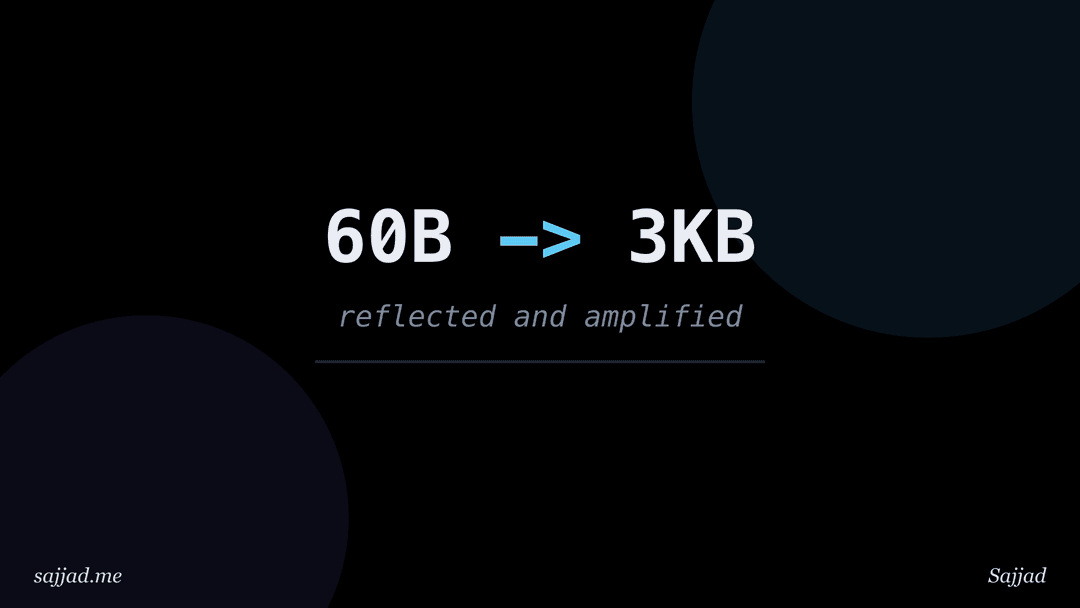
What is a DNS amplification DDoS attack?
A DNS amplification attack is a type of distributed denial-of-service (DDoS) attack in which an attacker sends small DNS queries to many DNS servers
Dive Deeper
What is a DNS firewall and do you need one?
A DNS firewall is a recursive resolver that enforces security rules on DNS traffic, blocking, rewriting or logging lookups for domains, IP addresses
Dive Deeper
What is a DNS rebinding attack?
A DNS rebinding attack is a technique that lets a malicious website use your browser to reach services on your private network or your own computer,
Dive Deeper
What is a DNS resolver and what does it do?
A DNS resolver is the server (or piece of software) that answers DNS questions on behalf of your devices. When your laptop wants the IP address for `
Dive Deeper
What is a DNS sinkhole?
A DNS sinkhole is a DNS server, or a set of rules on one, that gives false answers for specific domains on purpose, so that traffic meant for a malic
Dive Deeper
What is a DNS zone and a zone file?
A DNS zone is a portion of the DNS namespace that's managed as a single unit by one administrator and served by the same set of authoritative nam
Dive Deeper
What is a DNS zone transfer (AXFR) and why should you restrict it?
A DNS zone transfer is the mechanism that copies a DNS zone from a primary nameserver to its secondary nameservers, so they can all answer fo
Dive Deeper
What is a fully qualified domain name (FQDN)?
A fully qualified domain name (FQDN) is the complete, unambiguous name of a host or service in DNS, spelling out every label from the host itself all
Dive Deeper
What is a glue record and why is it required?
A glue record is an A or AAAA record for a nameserver that the parent zone publishes alongside a delegation, so resolvers can find the namese
Dive Deeper
What is a man-in-the-middle attack?
A man-in-the-middle (MITM) attack happens when an attacker secretly positions themselves between two parties who think they're talking directly to ea
Dive Deeper
What is a PTR record and how does reverse DNS work?
A PTR (pointer) record is a DNS record that maps an IP address back to a hostname. It's the opposite of an A or AAAA record: instead of asking "what
Dive Deeper
What is a supply chain attack on a website?
A supply chain attack on a website is an attack where criminals don't break into your site directly. Instead, they compromise something your site alr
Dive Deeper
What is a top-level domain (TLD) name server?
A top-level domain (TLD) name server is an authoritative DNS server for a TLD such as .com, .org, .uk or .dev. It sits one level below the ro
Dive Deeper
What is a TXT record and what is it used for?
A TXT record is a DNS record that holds free-form text attached to a domain name. It was originally meant for human-readable notes, but today it's mo
Dive Deeper
What is a web application firewall (WAF)?
A web application firewall (WAF) is a security layer that sits between your website and the internet, inspecting every HTTP and HTTPS request and blo
Dive Deeper
What is a wildcard DNS record and when should you use one?
A wildcard DNS record is a record whose leftmost label is an asterisk, such as *.example.com, that answers queries for any name under that domain w
Dive Deeper
What is a WordPress permalink and how do I change it?
A WordPress permalink is the permanent URL that points to a specific post, page, category, or other piece of content on your site. Unlike a temporary
Dive Deeper
What is a zero-day vulnerability?
A zero-day vulnerability is a security flaw in software that is unknown to the vendor, or known but not yet fixed, so there's no patch available when
Dive Deeper
What is an A record and when should you use it?
An A record (address record) is a DNS record that maps a hostname, such as example.com or www.example.com, to an IPv4 address, such as `192.0.2.1
Dive Deeper
What is an AAAA record and how does IPv6 DNS work?
An AAAA record (pronounced "quad-A") is a DNS record that maps a hostname to an IPv6 address, such as 2001:db8:10::1. It's the IPv6 equivalent
Dive Deeper
What is an ALIAS or ANAME record?
An ALIAS or ANAME record is a provider-specific DNS record that lets you point a name, usually your root domain such as example.com, at another **h
Dive Deeper
What is an authoritative name server?
An authoritative name server is a DNS server that holds the official, original records for a domain and answers questions about that domain from its
Dive Deeper
What is an MX record and how does email routing work?
An MX (Mail Exchanger) record is a DNS record that tells other mail servers which server accepts email for your domain. When someone sends a message
Dive Deeper
What is an NS record and how does DNS delegation work?
An NS (Name Server) record is a DNS record that names the servers holding the authoritative data for a zone. NS records are what make delegation
Dive Deeper
What is an SOA record and what do its fields mean?
An SOA (Start of Authority) record is the first and mandatory record in every DNS zone. It identifies the zone's primary nameserver and the administr
Dive Deeper
What is an SRV record and which services use it?
An SRV (service) record is a DNS record that tells clients which host and port provide a particular service for a domain. Where an A record only
Dive Deeper
What is an SSL/TLS certificate and how does it work?
An SSL/TLS certificate is a small digital file installed on your web server that proves your website's identity and allows browsers to set up an encr
Dive Deeper
What is Anycast DNS and how does it improve performance?
Anycast DNS is a way of running DNS servers where the same IP address is announced from many locations around the world at once, and the internet
Dive Deeper
What is BIMI and how does it show your logo in email?
BIMI (Brand Indicators for Message Identification) is an email standard that lets supporting inboxes, such as Gmail, Apple Mail and Yahoo, display yo
Dive Deeper
What is caching in WordPress and how does it work?
Caching in WordPress means storing a ready-made copy of something that took work to create, such as a full HTML page, the result of a database query,
Dive Deeper
What is clickjacking and how to prevent it?
Clickjacking is an attack where a malicious website loads your site inside an invisible or disguised frame and tricks visitors into clicking buttons
Dive Deeper
What is CNAME flattening and why do you need it?
CNAME flattening is a technique where your authoritative DNS server follows a CNAME chain itself and returns the final A and AAAA records to the clie
Dive Deeper
What is credential stuffing and how to defend against it?
Credential stuffing is an automated attack where criminals take usernames and passwords leaked from one website's data breach and try them on many ot
Dive Deeper
What is cross-site request forgery (CSRF)?
Cross-site request forgery (CSRF) is an attack that tricks a logged-in user's browser into sending a request to a website they're signed into, withou
Dive Deeper
What is cross-site scripting (XSS) and how to prevent it?
Cross-site scripting (XSS) is a vulnerability that lets an attacker inject malicious JavaScript into a web page so that it runs in other visitors' br
Dive Deeper
What is DNS spoofing (cache poisoning) and how to prevent it?
DNS spoofing is any attack that makes a device or resolver accept a forged DNS answer, and cache poisoning is the most damaging form of it: the a
Dive Deeper
What is DNS caching and why does it matter?
DNS caching is the practice of storing the answer to a DNS lookup for a set period of time, so the next request for the same name can be answered imm
Dive Deeper
What is DNS failover and how does it keep sites online?
DNS failover is a setup where your DNS provider continuously checks whether your main server is healthy and, if it stops responding, automatically ch
Dive Deeper
What is DNS filtering and how does it block threats?
DNS filtering is a security control that checks every domain a device tries to look up against lists of known malicious, risky or unwanted sites, and
Dive Deeper
What is DNS hijacking and how is it different from domain hijacking?
DNS hijacking is an attack that changes how a domain name resolves, so users are sent to an attacker's server, usually by tampering with the resolver
Dive Deeper
What is DNS load balancing?
DNS load balancing is a way of spreading traffic across several servers by publishing more than one IP address for the same hostname, or by varying w
Dive Deeper
What is DNS over HTTPS (DoH)?
DNS over HTTPS (DoH) is a protocol that sends DNS queries and responses inside ordinary encrypted HTTPS connections, instead of as plain-text packets
Dive Deeper
What is DNS prefetching and how to use it on your website?
DNS prefetching is a browser technique that resolves a domain name to its IP address before the page actually requests anything from it. You enable i
Dive Deeper
What is DNS propagation and why does it take so long?
DNS propagation is the period after you change a DNS record during which some people see the new value and others still see the old one. Despite the
Dive Deeper
What does SERVFAIL mean and how do you fix it?
SERVFAIL is a DNS response code that means "server failure": the DNS server you asked couldn't produce a valid answer. Unlike NXDOMAIN, it doesn't sa
Dive Deeper
What is DNS tunneling and how do attackers use it?
DNS tunneling is a technique that hides other data inside DNS queries and responses. Instead of using DNS only to look up names, a program encodes in
Dive Deeper
What is DNS and how does it work?
DNS (the Domain Name System) is the internet's naming system. It translates human-friendly names such as example.com into the numeric IP addresses,
Dive Deeper
What is DNSSEC and how does it protect your website?
DNSSEC (Domain Name System Security Extensions) is a set of extensions to DNS that adds cryptographic signatures to your domain's DNS records. When a
Dive Deeper
What is domain registrar lock and why should you enable it?
A domain registrar lock, often called a transfer lock or domain lock, is a setting at your domain registrar that prevents your domain name from being
Dive Deeper
What is dynamic DNS (DDNS) and when do you need it?
Dynamic DNS (DDNS) is a way of keeping a DNS record pointed at a device whose IP address changes. A small client, running on your router, a server or
Dive Deeper
What is EDNS Client Subnet (ECS)?
EDNS Client Subnet (ECS) is a DNS extension that lets a recursive resolver include part of the end user's IP address, such as the first 24 bits of an
Dive Deeper
What is Full Site Editing in WordPress?
Full Site Editing (FSE) is the set of WordPress features that lets you design and edit every part of your website, not just the content of posts and
Dive Deeper
What is the functions.php file in WordPress?
The functions.php file is a PHP file inside your WordPress theme that runs automatically on every page load, letting the theme add features and cha
Dive Deeper
What is GeoDNS and how does location-based routing work?
GeoDNS is a technique where an authoritative DNS server gives different answers to the same query depending on where the request appears to come from
Dive Deeper
What is headless WordPress?
Headless WordPress is a setup where WordPress is used only as a content management back end, while a separate application handles the front end that
Dive Deeper
What is hosting security and why does it matter?
Hosting security is the set of protections your web host puts around the servers, network, and infrastructure your website runs on. It covers things
Dive Deeper
What is HSTS and how to enable it?
HSTS (HTTP Strict Transport Security) is a security header that tells browsers to only connect to your website over HTTPS, never plain HTTP, for a pe
Dive Deeper
What is a lame delegation and how do you fix it?
A lame delegation happens when a domain's parent zone (such as .com) lists a nameserver for the domain, but that nameserver doesn't actually serve
Dive Deeper
What is leading and what line height should you use?
- Sajjad
- Typography
- 11 Oct, 2026
Leading is the vertical space between lines of text, measured from the baseline of one line to the baseline of the next. The word comes from the
Dive Deeper
What is negative caching in DNS?
Negative caching in DNS is when a resolver remembers that something doesn't exist. If a resolver asks for new.example.com and the authoritative
Dive Deeper
What is passkey authentication and can websites use it?
Passkey authentication is a way to sign in without a password, using a cryptographic key pair stored on your phone, computer, password manager, or ha
Dive Deeper
What is penetration testing for websites?
Penetration testing for websites is an authorised, simulated attack carried out by a security professional to find weaknesses that a real attacker co
Dive Deeper
What is secondary DNS and why should you use it?
Secondary DNS is a setup where one or more additional authoritative nameservers hold a read-only copy of your DNS zone, copied automatically from a p
Dive Deeper
What is SEO spam and how do hackers inject it into websites?
SEO spam is unwanted content that hackers secretly inject into a legitimate website to manipulate search engine rankings for their own products, usua
Dive Deeper
What is server isolation and why does it matter in shared hosting?
Server isolation is the set of techniques a hosting provider uses to keep each account on a shared server separate from every other account, so that
Dive Deeper
What is split-horizon DNS?
Split-horizon DNS (also called split-brain or split-view DNS) is a setup where the same domain name resolves to different answers depending on who's
Dive Deeper
What is SQL injection and how to prevent it?
SQL injection (SQLi) is a vulnerability that lets an attacker change the database queries your application runs by slipping SQL code into input field
Dive Deeper
What is a subdomain takeover and how to prevent dangling DNS records?
A subdomain takeover happens when one of your DNS records still points at an external resource, such as a cloud storage bucket, a hosting app or a lo
Dive Deeper
What is the difference between WordPress.com and WordPress.org?
In the world of website creation, WordPress reigns supreme as one of the most popular and versatile platforms. However, it's important to recognize t
Dive Deeper
What is the Gutenberg editor in WordPress?
The digital landscape is continually evolving, demanding more dynamic and versatile content management systems. WordPress, a leader in this domain, h
Dive Deeper
What is the OWASP Top 10 and how does it affect your website?
The OWASP Top 10 is a regularly updated, community-driven list of the ten most critical security risks facing web applications, published by the Open
Dive Deeper
What is the WordPress REST API and how to use it?
The WordPress REST API is a built-in interface that lets other applications read and write your WordPress content over HTTP using JSON. Instead of lo
Dive Deeper
What is TTL in DNS and how should you set it?
TTL (time to live) in DNS is a number, in seconds, attached to every DNS record that tells resolvers how long they may cache that record before askin
Dive Deeper
What is typography and why does it matter in web design?
- Sajjad
- Typography
- 11 Oct, 2026
Typography is the craft of arranging text so that it is readable, clear and appropriate for its purpose. It covers the typefaces you choose, but
Dive Deeper
What is typosquatting and how to protect your brand's domain?
Typosquatting is the practice of registering domain names that are slight misspellings or lookalikes of a real brand's domain, such as exmaple.com
Dive Deeper
What is website defacement and how to prevent it?
Website defacement is an attack where someone gains unauthorized access to your website and changes its visible content, usually replacing your homep
Dive Deeper
What is website security and why does it matter?
Website security is the set of practices, tools, and habits you use to protect a website, the server it runs on, the data it stores, and the people w
Dive Deeper
What is WordPress?
WordPress is the cornerstone of modern web creation, embodying a powerful platform that transcends its humble origins as a mere blogging tool. Born i
Dive Deeper
What is WP-CLI and how to use it?
WP-CLI is the official command-line interface for WordPress. It lets you manage almost every part of a WordPress site from a terminal, including inst
Dive Deeper
What is the wp-config.php file and what does it do?
The wp-config.php file is WordPress's main configuration file. It tells WordPress how to connect to its database, stores the security keys that pro
Dive Deeper
What is the x-height and why does it affect readability?
- Sajjad
- Typography
- 11 Oct, 2026
The x-height is the height of a typeface's lowercase letters, measured from the baseline to the top of a flat-topped letter such as x, excludin
Dive Deeper
What web hosting is needed for a WordPress website?
Choosing the right web hosting is critical to the success of your WordPress website. Hosting serves as the foundation of your site, influencing its s
Dive Deeper
How much white space should you use around text?
- Sajjad
- Typography
- 11 Oct, 2026
White space around text should grow with the size of the thing it separates: small gaps inside a block of text, larger gaps between blocks, and t
Dive Deeper
Why should you avoid all caps text?
- Sajjad
- Typography
- 11 Oct, 2026
You should avoid all caps text for anything longer than a few words because it's slower and more tiring to read than normal mixed-case text. Capi
Dive Deeper
What are widows and orphans and how do you fix them?
- Sajjad
- Typography
- 11 Oct, 2026
Widows and orphans are lines of text left stranded away from the rest of their paragraph. In traditional typesetting, an orphan is the first
Dive Deeper
What is the difference between WOFF, WOFF2, TTF and OTF?
- Sajjad
- Typography
- 11 Oct, 2026
TTF and OTF are desktop font formats, while WOFF and WOFF2 are compressed wrappers designed for delivering those same fonts over the web. TTF (Tr
Dive Deeper
What is word spacing and how does it affect readability?
- Sajjad
- Typography
- 11 Oct, 2026
Word spacing is the amount of horizontal space between words in a line of text. Its default size comes from the width of the space character in t
Dive Deeper
Wordfence vs Sucuri: which security plugin is better?
- Sajjad
- WordPress, Security
- 12 Sep, 2026
Wordfence is usually the better choice if you want a powerful free security plugin that runs on your own server, with a firewall, malware scanner, an
Dive Deeper
WordPress Child Theme: The Key to Safe and Effective Website Customization
Creating a child theme in WordPress is an essential skill for anyone looking to customize their website without compromising the integrity of the par
Dive Deeper
What is the WordPress database structure?
The WordPress database structure is a set of 12 core MySQL (or MariaDB) tables that store everything on your site except files: posts, pages, users,
Dive Deeper
How to set correct file permissions in WordPress?
- Sajjad
- WordPress, Security
- 07 Sep, 2026
The standard, correct file permissions for most WordPress sites are 755 for directories, 644 for files, and something tighter like 640 or 600
Dive Deeper
How to add security keys and salts in WordPress?
- Sajjad
- WordPress, Security
- 09 Sep, 2026
To add security keys and salts in WordPress, generate a fresh set of eight random values from the official WordPress.org secret key generator, then p
Dive Deeper
WordPress vs Wix: which is better for your website?
WordPress is better if you want full ownership, unlimited flexibility, and room to grow into a large or complex website, while Wix is better if you w
Dive Deeper